Today we take for granted that we can board an aircraft from any major airport in Canada and in several hours land safely in London, Paris, Lisbon or anywhere in the world. That was not the case in 1957.
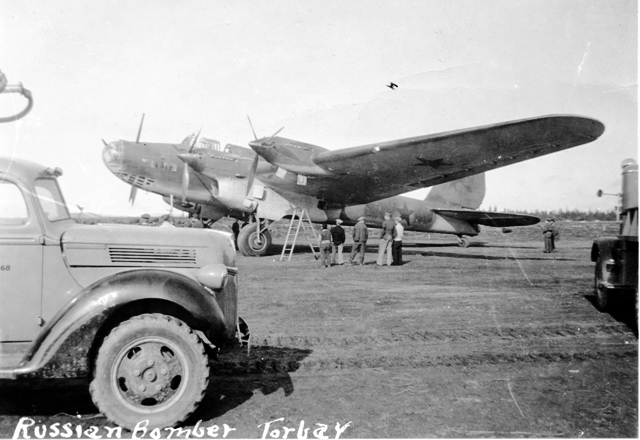
Russian Bomber at RCAF Torbay, NF. Aircraft is being ferried from Canada to our Ally during the Second World War. Roger Litwiller Collection, courtesy Ross Milligan, RCNR. (RTL-REM319)
In 1957, air travel across the oceans still required multiple fuel stops along the way. During the Second World War ferrying of aircraft from Canada was conducted with a steady stream of flights from Canada with stops in Gander, NF, Greenland and Iceland before reaching the UK. Many of these aircraft were piloted by women.
The Canadian Navy had operated two escort aircraft carriers during the Second World War. HMShips NABOB and PUNCHER were manned by Canadian sailors and the air detachment was supplied by the Royal Navy’s Fleet Air Arm. In 1946 the RCN acquired and commissioned HMCS WARRIOR with an entirely Canadian ship’s company and air detachment from the newly formed Canadian Naval Air Arm.
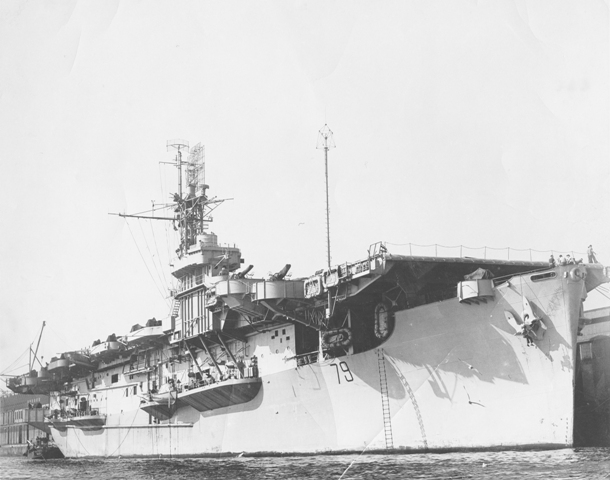
Canadian manned escort aircraft carrier, HMS PUNCHER nearing completion at Vancouver shipyard, February to May 1944.
Roger Litwiller Collection, courtesy Howard Abbott, RCNVR. (RTL-HA033)
Unlike the Air Force that has to move their aircraft to the theatre of operations, Trans-Atlantic flights for Navy aircraft were not necessary as an aircraft carrier takes its air wing consisting of fighters, anti-submarine aircraft and helicopters with them and is therefore capable of conducting air operations anywhere.
In addition to the regular flight operations, one of the functions of WARRIOR and its replacement HMCS MAGNIFICENT was the transfer of Royal Canadian Air Force aircraft from Canada to Europe. On several occasions the flight deck of these carriers were filled with RCAF fighters as cargo.
By 1957 MAGNIFICENT was being replaced by a new aircraft carrier, HMCS BONAVENTURE. Bonnie as the ship would become affectionately known by her sailors had an angled flight deck and steam catapult capable of launching and recovering jet fighters.
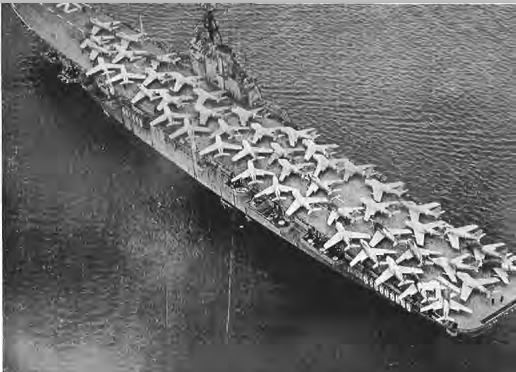
HMCS MAGNIFICENT with deck load of RCAF Sabre’s embarked. Photo -Crowsnest Magaxzine
Bonnie was built in the UK and would undergo its builder’s trials there. This necessitated the use of RCN aircraft to test the air operations prior to acceptance by the RCN. Canadian Naval Air Squadron VX10 base at the Naval air Station in Shearwater, NS. was tasked with the job, assigning two CS2F-1 Tracker anti-submarine aircraft and two F2H-3 Banshee jet fighters.
The aircraft were prepared for the long crossing, radio and communication equipment, engines, electronics were all checked and serviced including fuel consumption to ensure the engines were running at a the best possible performance for the long open water legs between airfields.
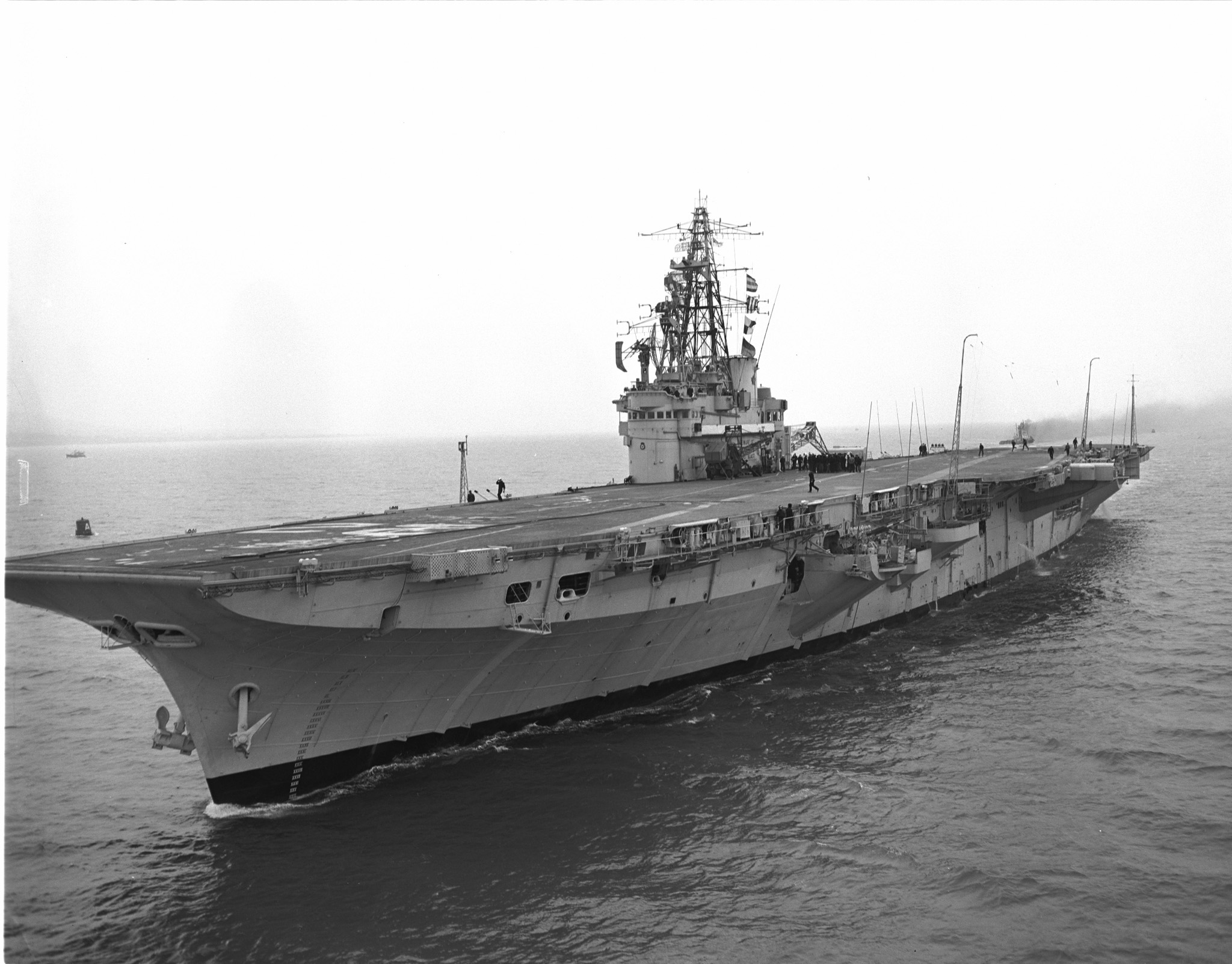
HMCS Bonaventure, RCN Photo (BN-480)
On 28 February 1957 the four aircraft departed NAS Shearwater[1] under the command of Commander Hubert James Hunter in Tracker 1502 with LCdr Sheldon “Shel” Rowell and Tracker 1506 piloted by LCdr Ken Nicholson and SLt. Morris “Moe” Komarisky. Banshee 700 was piloted by LCdr Anton “Doc” Schellinck with Lt. John “Jake” Birks in Banshee 702.[2] Along with the aircrew, 20 additional personnel from VX10 departed in an RCAF North Star to assist the flight with fueling, maintenance and servicing the aircraft en route.[3]
The RCN flight flew to St. Hubert, QC to join the RCAF’s Overseas Ferry Unit for the transit to the UK. The Navy pilots and aircrew were given a warm welcome from their Air Force counterparts, who were bemused that the RCN flight had made front page news.[4] Even though the RCAF had only started ferrying CF100 fighters the past summer.[5]
The next few days were occupied with additional flight test of the aircraft followed by adjustments by the RCN aircrew in preparation for the 5 March departure.
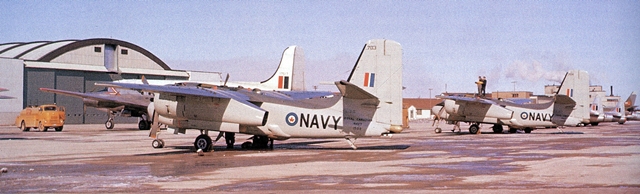
RCN Trackers and Banshee’s on the flight line at RCAF Air Station St Hubert, QC. prior to Trans-Atlantic flight in March 1957. Photo -Banshees in the Royal Canadian Navy.
Unfortunately on the scheduled departure date the forecast for the first stop at Goose Bay, Newfoundland called for heavy snow and a ceiling of between 300 and 1,000 feet the flight was delayed.[6]
The next morning the forecast was favourable and the first leg of the Trans-Atlantic flight to Goose Bay began on 6 March. Joining the RCN’s two Banshee and two Tracker aircraft were six Sabre jet fighters and two North Star from the RCAF, the RCN aircrew were in one of the North Star.[7] LCdr Rowell reported the flight arrived at Goose Bay in a blinding snowstorm and landed without incident later that day.[8]
The morning of 7 March found some freezing rain in Goose Bay at the early departure time for the Trackers delaying takeoff until 0830. These were the slower of the aircraft in the group and therefore left before the Banshee and Sabre fighters which departed at 1130. Despite a 3 hour head start and the Tracker aircrew looking forward to arriving at Narsarsuaq, Greenland ahead of their counterparts, it didn’t take long for the contrails of the fighter aircraft to pass above them.
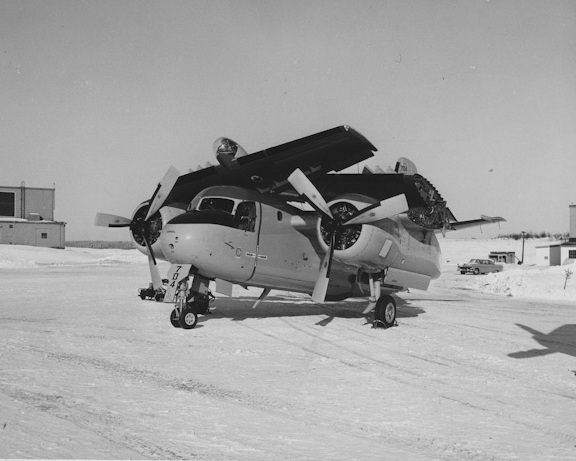
Tracker from VX10 Squadron was one of two Trackers to be the 1St Rcn aircraft to fly across the Atlantic in Marh 1957. Photo -Shearwater Aviation Museum (SAM2006)
All aircrew reported excellent radio reception and bearings while on the open water portion of the flight, receiving clear radio compass bearings from shore.[9]
Cdr Hunter reported the airfield at Narsaraq is inland up a 50 mile fjord with 6,000 foot mountains on either side and the airstrip is next to a 500 foot cliff. Fortunately weather and visibility were good when the flight arrived, the Banshees flew the 711 miles from Goose Bay in 1.8 hours while the trackers flying time was 5 hours.[10]
LCdr Rowell stated that the pilots and aircrew were treated to an excellent meal and festivities celebrating the successful completion of the longest leg of the flight.[11]
The 8 March departure from Narsaaraq was delayed due to difficulties with the Trackers. The temperature had reached a bitter 5° Fahrenheit overnight and the aircraft heaters that were promised had not been delivered. Once the aircraft had been warmed the flight took off at 0900 followed by the jets at 1030.[12]
The Banshees and Sabres had an easy transit being able to fly at a higher elevation and were not affected by a storm on the open water section. The Trackers were not as fortunate, LCdr Rowell recalled they left Greenland in excellent weather with a good forecast, which he considered a gift as it was his birthday, until between Greenland and Iceland they “ran into a dandy of a storm that was not on the forecast.”[13]
The Trackers were forced to fly below the cloud cover almost to sea level with a very nasty sea underneath, almost no visibility, icing and a 30 knot headwind. Despite the weather the trackers arrived at Keflavik, Iceland only 25 minutes behind their estimated time of arrival.[14] Cdr Hunter reported the airfield at Keflavik was bleak and buffeted with a 30 knot crosswind, the approaches were clear and the accommodations at the airport hotel were excellent.[15]
The forecast for 9 March was poor as reported by the US Airforce meteorologist at Kaflavik. Predicting high clouds up to 30,000 feet and icing. Following discussions with the airfield at the destination in Kinloss, Scotland which stated local weather was excellent and a report from a pilot arriving at Keflavik from the UK that clouds were at 6,000 feet, the USAF forecaster changed his weather map and indicated the RCN/RCAF flight should be clear above 9,000 feet and no icing.[16]
The Trackers took off with the Banshees at 1020. Once over the open water, the Tracker pilots quickly learned the original forecast was still accurate, encountering moderate icing. The de-icing boots on the wings and propeller de-icing worked well and the aircrafts flying quality was not affected, despite five inches of ice accumulating in the wing between the fuselage and the engine nacelles. Landfall was made at Cape Wrath and the Trackers landed at Kinloss after 5 hours of flight time.[17]
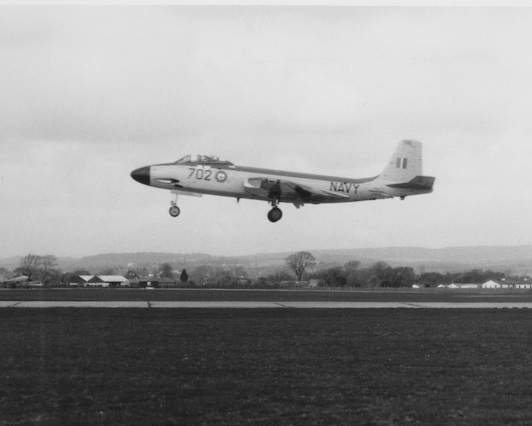
Banshee 702 along with 700 were the first two RCn aircraft to make landfall in Scotland. Photo -Shearwater Aviation Museum (SAM.1999.55.1h)
The Banshee pilots with their aircraft’s higher ceiling found the revised forecast to be absolutely correct, completing the 674 nautical mile flight in 1.8 hours, landing at Kinloss at 1320. LCdr Anton “Doc” Schellinck and Lt. John “Jake” Birks became the first RCN pilots to fly the Atlantic.[18]
Dinner that night for the RCN sailors was cause for celebration. Also a bit of sorrow as the RCAF pilots and aircrew would be separating in the morning, flying to Prestwick to deliver the Sabres. The pilots of the two services had grown a close comradeship over the flights.
The RCN pilots and aircrew had a respite for the 10th of March as their destination airfield; NAS Ford was closed on Sundays. The two Trackers, two Banshees and two RCAF North Stars carrying the aircrew and equipment for the sea trials departed Kinross on the 11th and arrived at Naval Air Station Ford near Portsmouth later that day.
A rather warm reception was waiting for the Canadians by their host squadron RNAS 700 Squadron. Cdr Hunter reported the flight had gone as well as expected and was fortunate that the preparations in advance of the flight resulted in no breakdowns or delays along the route. Hunter concluded his report, “after a few days off in which many of the sailors enjoyed the local sights and London, the health, morale and conduct of the detachment is satisfactory.”[19]
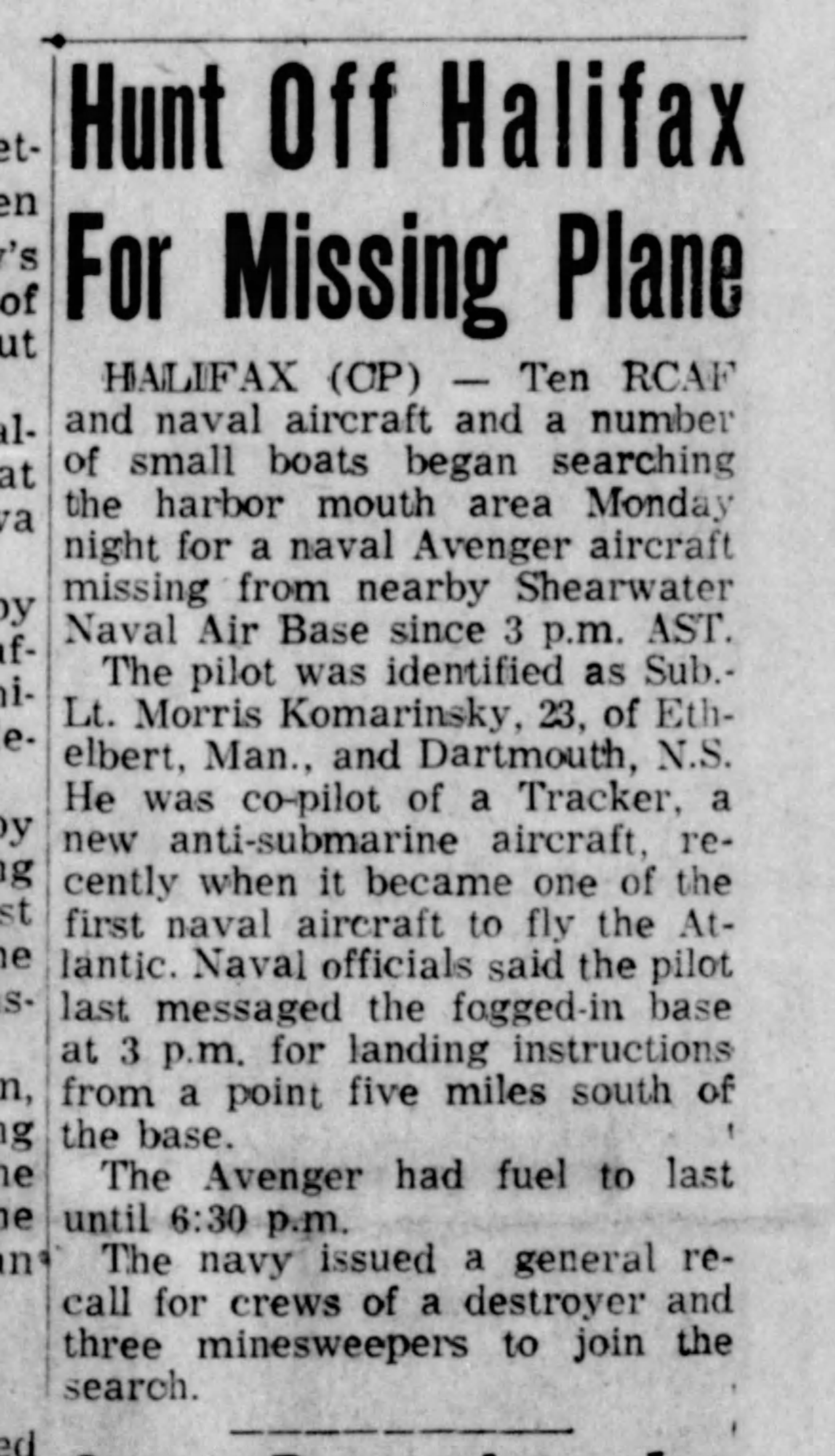
The Telegraph-Journal, Saint John, NB. 19 March 1957. p. 1.
Sailors from the group that were not required for the air operations trails in BONAVENTURE returned to NAS Shearwater. This included SLt Morris Komarisky, who had co-piloted Tracker 1506. Sadly, 8 days after the successful completion of the Trans-Atlantic flight he was killed when his Grumman Avenger went missing off the coast of Nova Scotia on 18 March.[20]
Komarisky was returning to Shearwater when he radioed at 3 pm to the fogged in Naval Air Station control tower for landing instructions and gave his position as 5 miles south of the airfield. That was the last message from the 23 year old naval aviator. A large search began immediately involving ten RCN, Canadian Government Ships and other vessels as well as several aircraft and shore parties. The search lasted nine days with no trace of the pilot or aircraft.[21]
The air trails by the Tracker and Banshee aircraft were delayed by fog until 2 April. Later that day the two Banshees, piloted by LCdr Sheldon “Shel” Rowell and LCdr Ken Nicholson were able to approach the new aircraft carrier. Rowell stated he and Nicholson were competing for the first deck landing, as He had taken off first, he was formation leader and the honour of first landing was his. He was quite disappointed to be waved off as he was about to land and knew his shipmate Ken Nicholson would have the honour. To Ken surprise his wingman was waved off as well and on the next go around LCdr Sheldon Nicholson became the first RCN pilot to land on the Canadian Navy’s newest aircraft carrier HMCS BONAVENTURE!
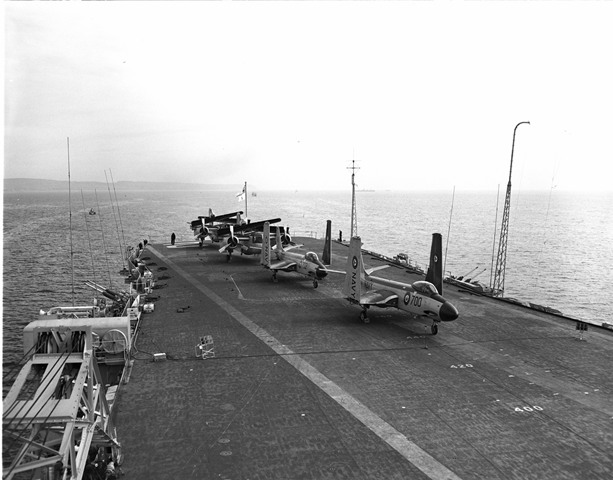
Cover Photo: CS2F Trackers and F2H3 Banshee’s, used during Bonaventure flying trials ranged on deck for entering Harbour at Belfast, New Ireland. These four aircraft were the first RCN aircraft to cross the Atlantic in March 1957. RCN Photo (BN-632)
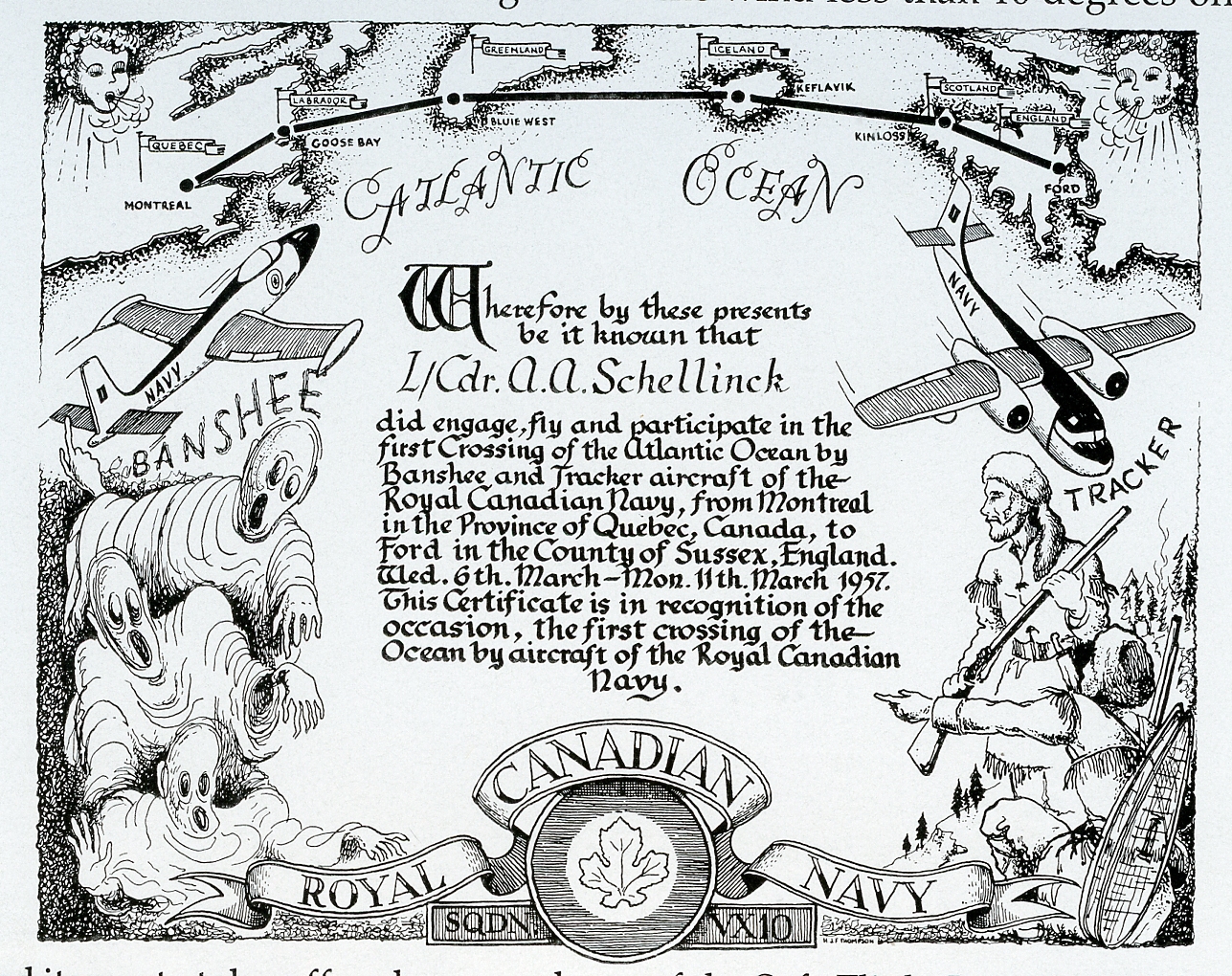
Certificate presented to all aircrew from VX10 that participated in the Trans-Atlantic Flight. Courtesy Banshees of the Royal Canadian Navy.
If you have found value in this article and the additional content I create on this website, please feel free to click on the coffee icon on the bottom right of the webpage and “Buy me a Coffee!” Your contribution will ensure that I can continue to provide the stories of these incredible Canadians and the Canadian Navy. Thank you for your support. Cheers, Roger
References:
[1] Carl Mills, Banshees in the Royal Canadian Navy, (Banshee Publication, Willowdale, ON. 1991) p. 222
[2] John MacFarlane, Robbie Hughes, Canada’s Naval Aviators, (Shearwater Naval Aviation Foundation, Shearwater, NS. 1997) p. 28, 159-160, 178, 241, 274, 279-280.
[3] “Aircraft Fly Ocean to Join BONAVENTURE,” The Crowsnest Magazine, Vol. 9, No. 5. March 1957. p. 2
[4] Carl Mills, p. 222
[5] Frank J. Keen, “Anchor, Jeep and Wing,” Hamilton Spectator, 5 March 1957. P. 36.
[6] Carl Mills, p. 223
[7] Ibid
[8] Peter Charlton, Nobody Told Us It Couldn’t Be Done: The VX10 Story (Author Published, Ottawa. 1993) p. 69.
[9] Carl Mills, p. 223
[10] “RCAF Assistance Smooths Flight,” The Crowsnest Magazine, Vol. 9 No. 7. May 1957. P. 10
[11] Peter Charlton, Nobody Told Us It Couldn’t Be Done: The VX10 Story (Author Published, Ottawa. 1993) p. 69.
[12] Carl Mills, p. 223
[13] Peter Charlton, Nobody Told Us It Couldn’t Be Done: The VX10 Story (Author Published, Ottawa. 1993) p. 69.
[14] Carl Mills, p. 223
[15] Ibid
[16] Carl Mills, p. 225
[17] Ibid
[18] Ibid
[19] Ibid
[20] John MacFarlane, Robbie Hughes, Canada’s Naval Aviators, (Shearwater Naval Aviation Foundation, Shearwater, NS. 1997) p. 178.
[21] “Hunt Off Halifax for Missing Plane,” The Telegraph-Journal, Saint John, NB. 19 March 1957. P. 1.
