
Standing at the Sidney St. overpass on The Highway of Heroes at Trenton, before the funeral procession of Cpl Nathan Cirillo travels from Ottawa to Hamilton.
Photo Courtesy Andrew Johnson -Toronto Star.
Today is Bell Let’s Talk Day. This is an excellent program to increase awareness of mental illness. Bell will donate 5 cents for every tweet with the label#BellLetsTalk towards mental health programs in Canada.
Being an author is my passion and dream, in the real world I am a Paramedic and have been for 33 years. During this time I also served as a volunteer firefighter and a Naval Officer in the Canadian Armed Forces for several years. Contrary to popular belief, being an author does not pay the bills.
In my career I have had to face Critical Incident Stress (CIS) and Post Traumatic Stress Disorder (PTSD) several times. I have experienced this personally and professionally.
My first experience was shortly after I started work, still a rookie working with a junior partner. We were called to the sudden death of an infant. We attempted to resuscitate the child & quickly moved to the ambulance, as we rushed out of the home the frantic mother screamed. We were fortunate to get a pulse back on the child, after stabilizing in the ER we immediately transferred the child to the local upper tier hospital. The child died, shortly after we arrived.
When we returned to the ambulance base several hours after the end of our shift, we were met by our supervisor, who provided a severe reprimand for taking the transfer after our shift ended. To this day I can still hear that shriek of the grief stricken mother.
On another occasion, while I was the commanding officer of the local cadet corps. We were called to a drowning in the river and as I stepped out of the ambulance, one of my cadet parents came running to me yelling it was her son. The Fire Department divers quickly found the body and we began resuscitating him. Continuing our effort we transported his lifeless body to hospital, we continued to assist in the hospital for over an hour.
Following the pronouncement of death, I was asked to inform the family as I knew them personally. This child, my cadet, had a sister and two cousins all cadets in my corps. The parents asked if he could be buried in his uniform and if I would say the eulogy at his funeral.
When I spoke to my management, asking for a debriefing, the response was a simple, “Just don’t let those things get to you.”
There have been other occasions, all have been met with similar responses.Because of my own experiences in CIS and PTSD, I have actively educated myself in this area. Taking several courses and seminars. Over the years, I have petitioned our management teams for change.
As a profession we have made great progress over the past 33 years. When I started, oxygen and a blanket was our only course of treatment. Today we can aggressively treat most serious conditions in your living room, with a variety of drugs, cardiac monitors and defibrillators.
Unfortunately we have not improved in the way we treat our own. I have listened to management teams from several services state, we offer a counselling service, but we don’t want to push help on the front line because then people will use it and want time off their shift.
The first intervention on realizing that a First Responder has just experienced a Critical Incident is the single most important action that can be taken. Yes it might require a few hours “off shift,” but this is still better than having a First Responder become emotionally or mentally disabled later or worse yet, to lose them altogether.
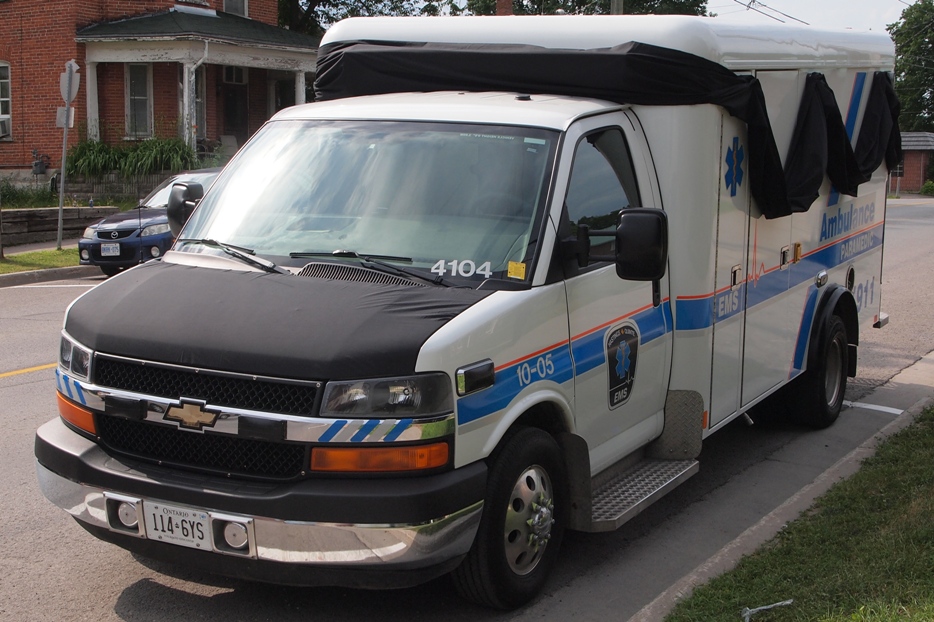
An ambulance, normally used to save lives, is dressed for the funeral of a paramedic who dedicated his life in the service of others.
Over the years I have watched as one Paramedic walked into the office, carrying his uniforms, set them on the table and walk out, without saying a word. For other Paramedics and First Responders, I have stood as we buried them, some from illness, a few from Line of Duty Deaths and others by suicide.
One group in particular has aggressively worked to educate First Responders and Management on the dangers of CIS and PTSD. The TEMA Conter Memorial Trust has provided resources to many First Responders.
I strongly encourage a visit to there website,http://www.tema.ca/
Because of my training in CIS and PTSD, I have been fortunate and able to recognize these critical events and have the tools to work through them. I have also been able to assist my co-workers and fellow First Responders in an “un-official” capacity, providing debriefings, one-on-one and lectures.
Whether you are a Paramedic, Police Officer or Firefighter, each of us has chosen our profession because we have answered a call to serve and protect our communities. We must take a serious look at how we protect ourselves and each other from the emotional aspects of our career and move forward to remedy this serious problem.
“Suck It Up Buttercup,” is no longer an acceptable response to First Responder CIS and PTSD!
