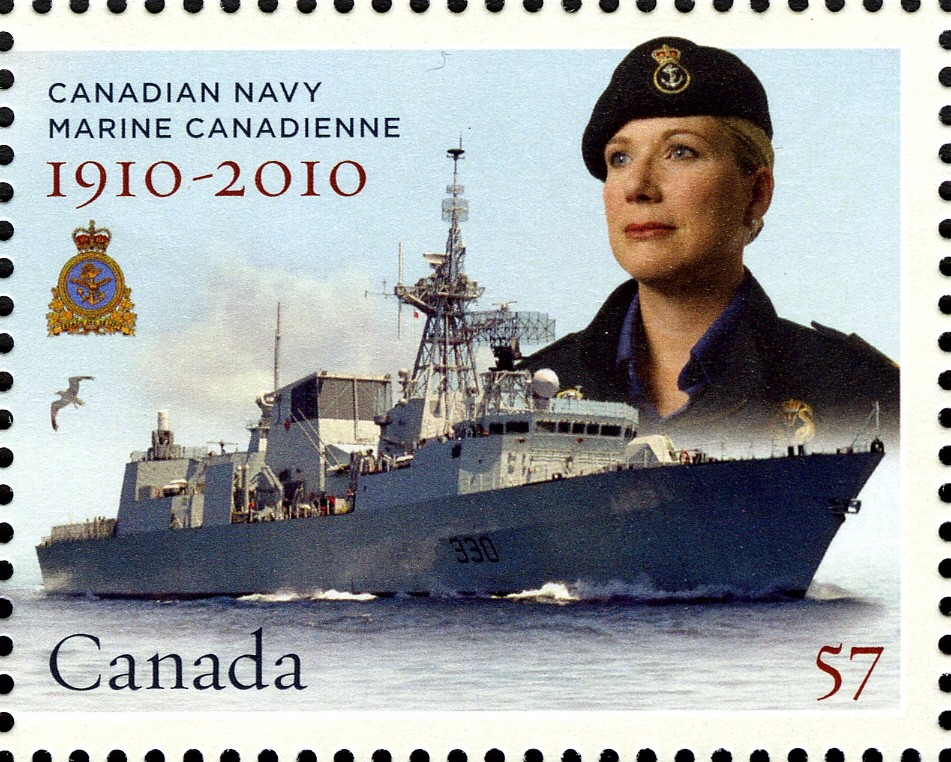
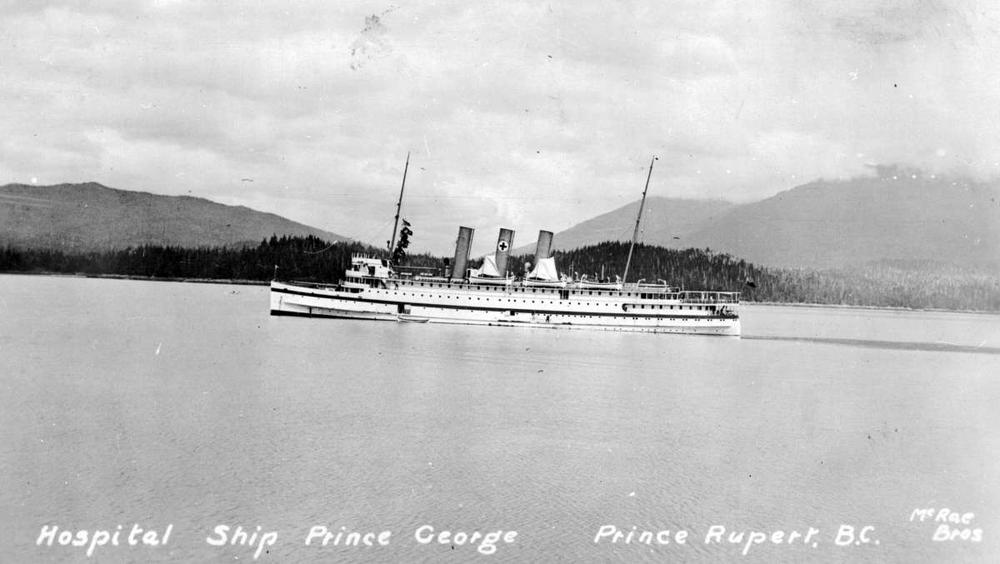
RCN Hospital Ship HMCHS PRINCE GEORGE took nurses to sea in WWI.
On 8 August 1914 a contingent of nursing sisters sailed in the the hastily converted, His Majesty’s Canadian Hospital Ship PRINCE GEORGE. I wonder if they realized they were making history. They were the first women to serve at sea in a ship under the control of the Royal Canadian Navy! This milestone would not be repeated until 1980 in HMCS CORMORANT.
Women have played an active and integral role in Canada’s Maritime history. The Royal Canadian Navy continues to celebrate the diversity and accomplishments of the women who have served and are serving in Canada’s Navy.
Below is a list of milestones accomplished by many of the dedicated women that have lead the way for Canadian sailors.
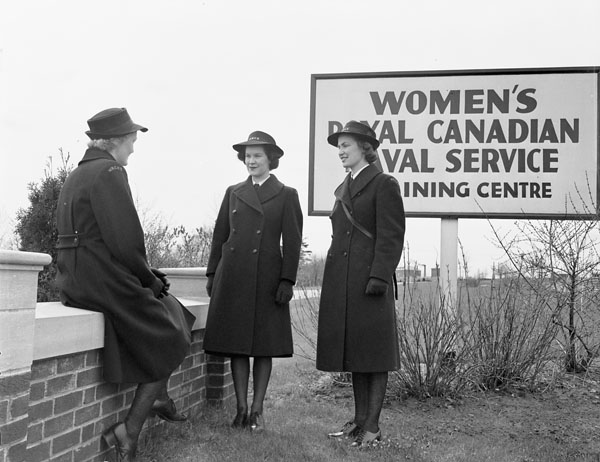
Women’s Royal Canadian Naval Service. Credit: Lt Kenneth George Fosbery / Canada. Dept. of National Defence / Library and Archives Canada / PA-153499
My first experience with women who had served in Canada’s Navy was as a young high school student working in the school cafeteria at Forest Heights Collegiate in Kitchener, ON. The head of the cafeteria was a veteran of the Women’s Royal Canadian Navy Service (WRCNS) during WWII. She was a fiery, feisty lady, who instantly commanded respect. My first impression of this woman was; there is something special about her. She had a heart of gold and when she found out I was a Sea Cadet, she was an incredible influencer.
Over 6,000 women volunteered to serve in the WRCNS during the war. Vice Admiral Percy W. Nelles, Chief of Naval Staff spoke of the their service,
“I wish to thank the patriotic women who have entered their country’s service and have added so capably to the combat strength of the navy by helping to man the shore establishments in this country. In one short year you have proved yourselves of immeasurable value to the naval service by taking over many tasks with skill, diligence and cheerfulness. As Chief of Naval Staff, I am proud of your record and the contribution you are making to the final victory.”
Like most of the world, immediately following WWII the WRCNS were demobilized, the same as the countless women who worked in the factories for the war effort.
The dynamic of the RCN had changed during the war years and women returned to the navy in 1951 as members of the RCN Reserves. From that moment on, the Navy has always looked forward to the future, building on the strength of the women who had served before.
Initially women could only serve in shore establishments. It would take sixty-six years before women returned to sea duty and only in support roles in HMCS CORMORANT.
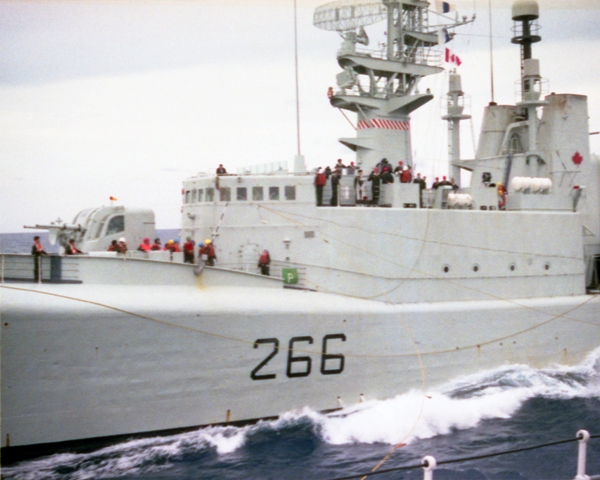
HMCS NIPIGON in 1981. Roger Litwiller photo.
There was resistance. In 1990, HMCS NIPIGON was the first ship refitted to include specific accommodations for a mixed gender ship’s company, opening all sea-going trades to women. NIPIGON was known through the fleet by her nickname, “Nipper.” Following her refit in 1990, she was given a new, more derogatory nickname of “Nipples.” Fortunately, attitudes and prejudice would evolve.
Today, all branches and trades in the RCN are open to women, serving at sea and ashore. A “Sailor is a Sailor” is the norm, regardless of gender.
Below is a compilation of some of the important dates in the legacy of the RCN and the contributions of women, who have chosen to stand “Ready Aye Ready.”
-
1898-1902 -Nurses sail with the Canadian military in the Yukon Field Force and the three Canadian contingents for the Boer War in South Africa.
-
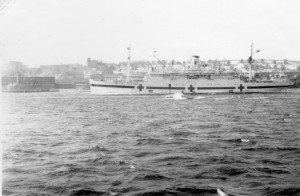
The Canadian hospital ship Lady Nelson leaving Cherbourg Harbour, October/November 1944.
Roger Litwiller Collection, courtesy Douglas Campbell, RCNVR. (RTL-DC040)1914-1918 -Women serve as Nurses in Hospital Ships during World War I.
-
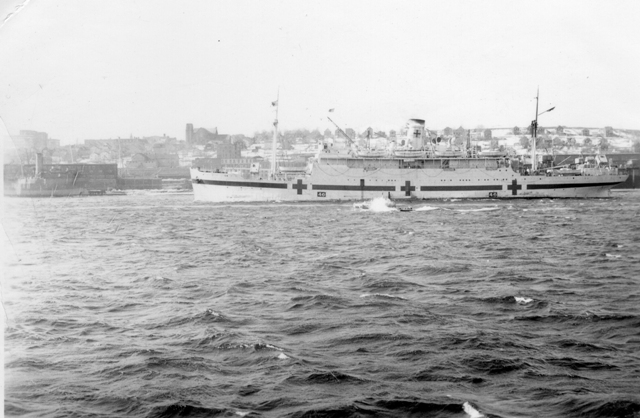
8 August 1914 -First Canadian Nurses go to sea in a ship under RCN control, The Grand Trunk Steamships passenger liner SS Prince George is briefly commandeered into the RCN and hastily converted to an emergency Hospital Ship for the anticipated battle between the German Pacific Fleet and the sole RCN ship on the West Coast, HMCS RAINBOW. HMCHS PRINCE GEORGE shadowed RAINBOW while on patrol and provide rescue for the Canadian sailors after the battle. When the threat diminished HMCHS PRINCE GEORGE was paid-off and returned to her owners on 1 September 1914, having served only twenty-five days with the RCN.
-
1939-1945 -Once again responding to the “Call to Duty”, women serve in Hospital Ships for World War II.
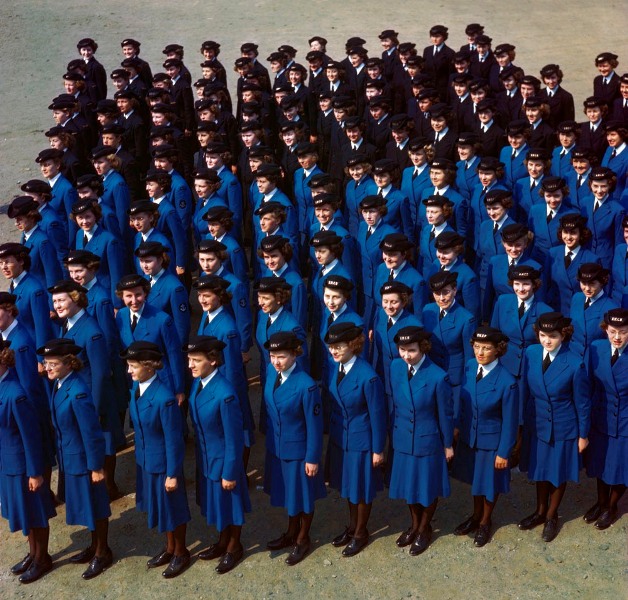
Women’s Royal Canadian Naval Service on parade. Credit: Canada. Department of National Defence / Library and Archives Canada/4950985
-
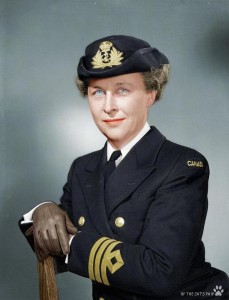
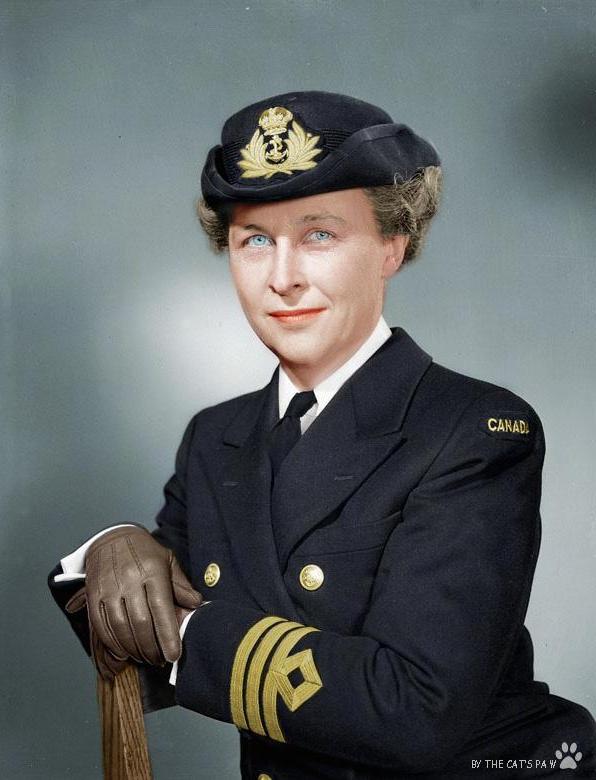
Commander Adelaide Sinclair, Director of the Women’s Royal Canadian Naval Service. Photo: Lt Gerald M. Moses / Canada. Dept. of National Defence / Library and Archives Canada / PA-191176. Colourization by JabbaLeChat.
31 July 1942 -An Order-in-Council establishes the Women’s Royal Canadian Naval Service (WRCNS).
-
29 August 1942 -The first course of sixty-seven probationary “Wrens” for the newly created Women’s Royal Canadian Naval Service begins at Kingsmill House, Ottawa. Twenty-two women pass as officers in the RCN and are the first women in the Commonwealth to hold the King’s commission.
-
18 September 1942 -Commander Adelaide Sinclair is appointed as the first Director of the WRCNS and given the rank of Acting Captain.
-
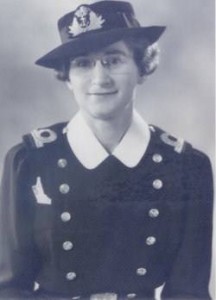
Sub-Lieutenant Agnes Wilkie became the first female casualty of the RCN on 14 October 1942
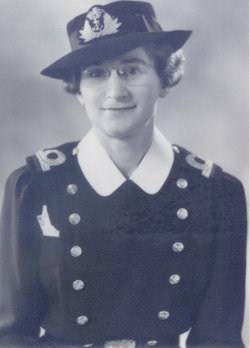
14 October 1942 -Newfoundland – Cape Breton Ferry, SS Caribou is torpedoed and sunk by U69 in the Cabot Strait. One Hundred and Thirty Seven are killed. Sub-Lieutenant Margaret Brooke and Sub-Lieutenant Agnes Wilkie both Royal Canadian Navy Nursing Sisters survived the sinking. The two managed to cling to an overturned lifeboat until Wilkie became unconscious from the cold. With one hand holding the lifeboat and her other clinging to her friend, Brooke continued to hold Wilkie until daybreak when a strong wave carried her away. Sub-Lieutenant Agnes Wilkie, is the first female Canadian Navy casualty of the Second World War.
-
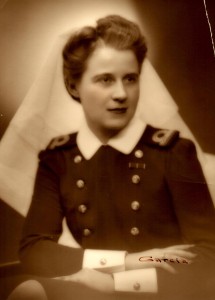
Margaret Brooke, RCN Nursing Sister
1 January 1943 -Sub-Lieutenant Margaret Brooke, RCN Nursing Sister is awarded, Member of the British Empire (MBE) for her actions during the loss of SS Caribou. The citation reads.
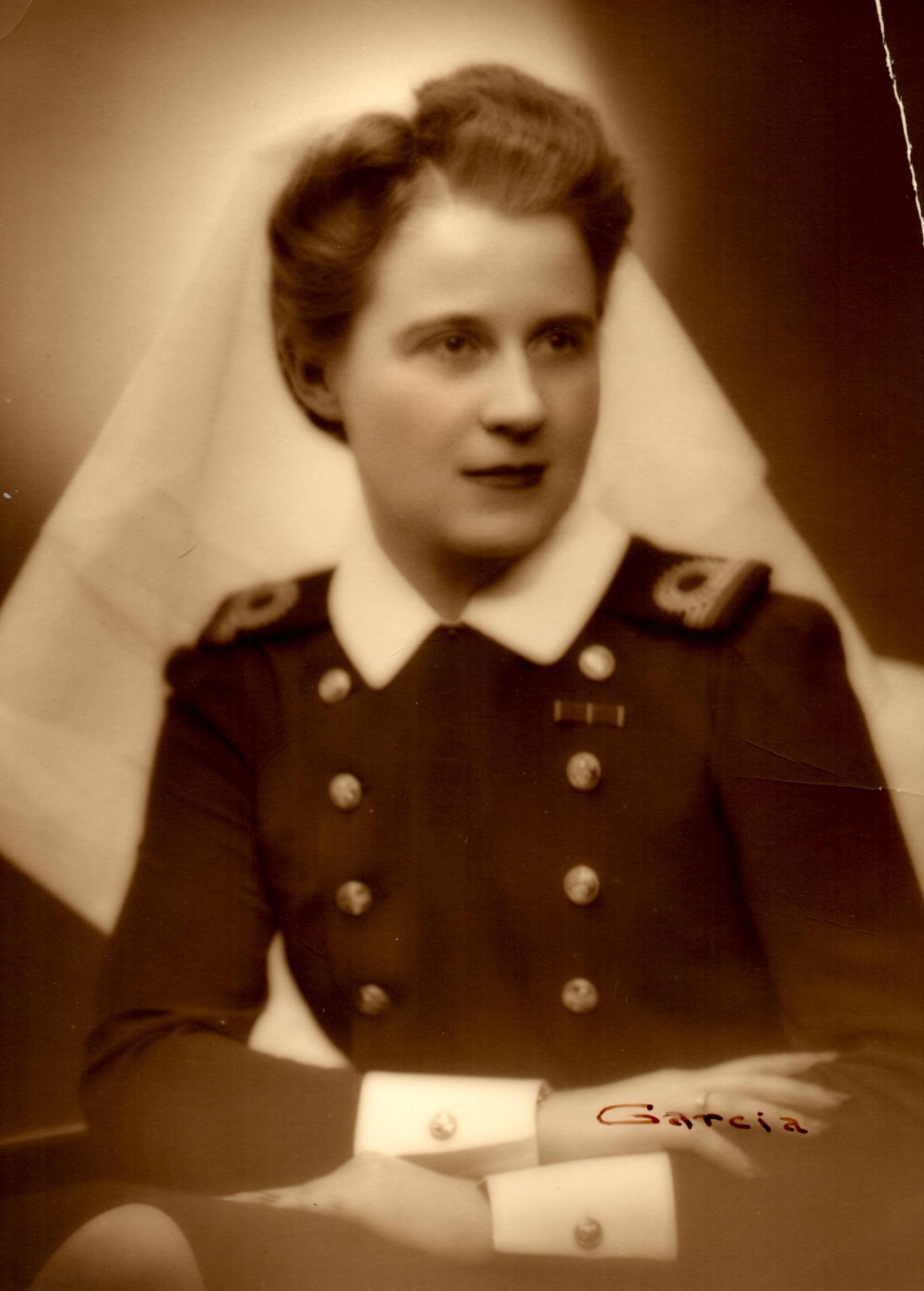
“For gallantry and courage. After the sinking of the Newfoundland Ferry S.S. Caribou, this Officer displayed great courage whilst in the water in attempting to save the life of another Nursing Sister.”
-
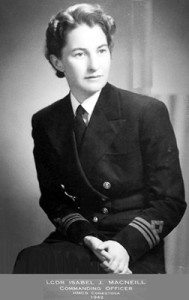
Lieutenant Commander Isabel Macneill
1 June 1943 -HMCS CONESTOGA is commissioned in Galt, Ontario. The RCN shore establishment will be responsible to provide training for the WRCNS. Lieutenant-Commander Isabel Macneill, WRCNS is appointed as CONESTOGA’s Commanding Officer and becomes the first women to command a ship in the British Commonwealth. As such she is the only women outside of the Royal Family to rate being piped aboard a warship.
-
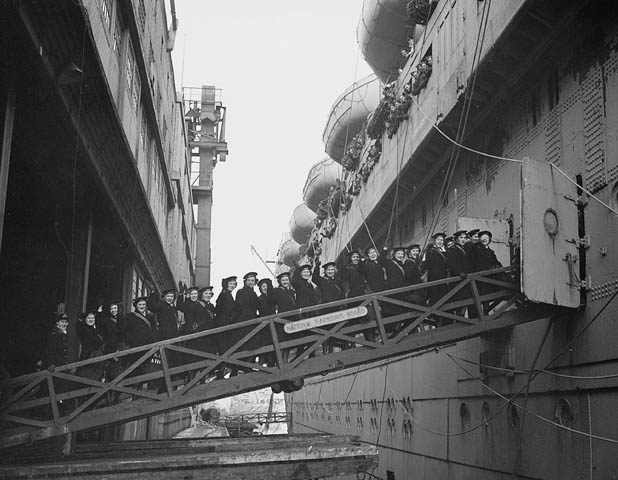
WRENS leaving Canada for overseas service. LAC/RCN Photo.

-
29 August 1943 -In celebration of the first anniversary of the WRCNS, 1000 WRENS march through the streets of Halifax, with Rear Admiral L.W. Murray, RCN, Commander and Chief Northwest Atlantic, accepting the salute during the March Past.
-
4 September 1943 -The first draft of fourteen WRENs (Women’s Royal Canadian Naval Service) leave for service in Britain, assigned to the Royal Canadian Navy Headquarters in London.
-
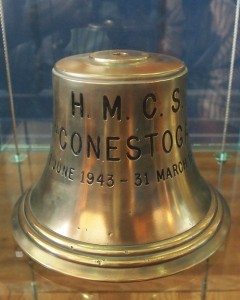
HMCS CONESTOGA Bell. Roger Litwiller Photo.
8 June 1944 -LCdr Isabel Macneill awarded the Order of the British Empire (OBE). Citation reads as follows;

“Lieutenant Commander Macneill has served with the Women’s Royal Canadian Naval Service since its inception. She is the first and only woman in the Canadian Navy to be in command of a ship. As Commanding Officer of HMCS CONESTOGA she has been responsible for the basic training of almost every member of her service. Her wide knowledge, her profound sympathy and her unfailing and inspiring devotion to duty have made her contribution one without parallel in the service.”
-
1 January 1945 -Commander Adelaide Sinclair receives the Order of the British Empire (OBE). Citation, reads as follows;
“Commander Sinclair has shown untiring zeal and outstanding ability, tact and judgment in organizing the Women’s Royal Canadian Naval Service into a most efficient and well- disciplined unit.”
-
31 March 1945 -HMCS CONESTOGA, Training Establishment for WRCNS is paid-off and closed.
-
31 August 1946 -The Women’s Royal Canadian Naval Service (WRCNS) ceases to exist, all its members having been demobilized. In total 6,783 women had enlisted, serving in 39 trades and over 1000 were posted overseas. Twenty Wrens received various degrees of the Order of the British Empire and two received a King’s Commendation. Six Wrens died in service with the WRCNS.
-
24 April 1951 -Defence Minister Brooke Claxton announces in the house of commons that a limited number of women will be recruited to serve in the Royal Canadian Navy Reserves.
-
2 October 1951 -First course of 25 Wrens begins at HMCS Cornwallis. A total of 500 women will be recruited to serve in the RCNR. Positions open to women include, storeswomen, pay and administrative writers, medical assistants, naval air-women, harbor craft operators, communicators, general duty Wrens, radio technicians, radio technicians (air), electrical technicians, electrical technicians (air) and for maintenance and inspection duties in the ordnance branch.
-
25 February 1955 -The Honorable Ralph Campney, Minister of National Defence, announces that women will become a part of the permanent force in the Royal Canadian Navy. It had been the policy since 1951 that women would be enrolled in the Royal Canadian Navy (Reserve) only.
-
1979 -Canadian Military colleges open their doors to women.

HMCS CORMORANT. Courtesy Mac Mackay Shipfax.
-
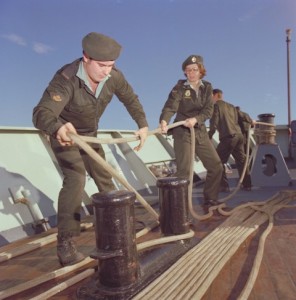
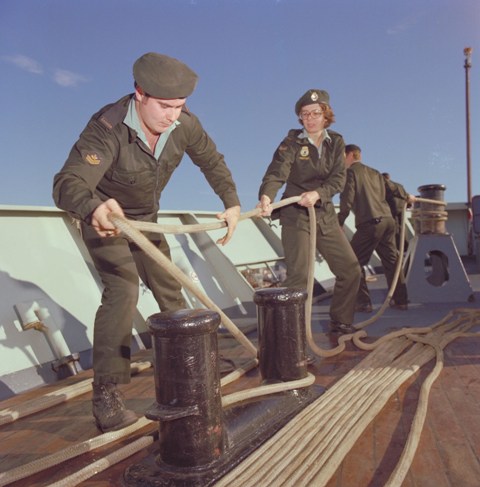
MS Pierre Gendron and Cpl. S. Thompson, Supply Tech, HMCS Cormorant. MS Gendron makes a turn on the bollards while Cpl. Thompson handles the slack line. Photo Courtesy RCN DHist.
1980 -HMCS CORMORANT begins trials with a mixed gender ship’s company as part of the Service Women in Non-Traditional Environments and Roles (SWINTER) project.
-
1 August 1981 -Commander Marilyn O’Hearn takes command of HMCS HUNTER, in Windsor, Ontario. Becoming the first female to command a Naval Reserve Unit and first women to command a Stone Frigate since WWII.
-
1987 – Combat Related Employment of Women trials are announced for selected naval vessels.
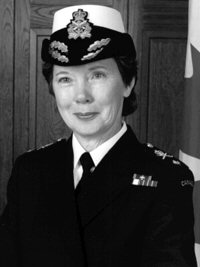
Commodore Lorraine Francis Orthlieb
-
1989 – Lorraine Francis Orthlieb is promoted to the rank of Commodore and appointed Senior Naval Reserve Advisor, becoming the first female flag officer.
-
1990 -The Minister’s Advisory Board on Women in the Canadian Forces is established by the Minister of National Defence to monitor the progress of gender integration and employment equity in the CAF.
-
16 February 1990 -HMCS NIPIGON (2nd), returns to service post refit and is the first RCN warship with accommodations for a mixed gender ship’s company.
-
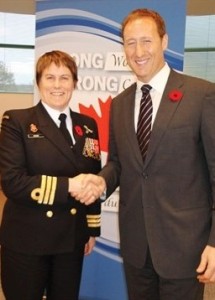
Cdr Leanne Crowe
1993 -Lieutenant (Navy) Leanne Crowe is the first woman to qualify as a clearance diving officer and subsequently the first female Commanding Officer of the Experimental Diving Unit.

-
1996 -Lieutenant Commander Wafa Dabbagh becomes the first CAF member to wear the hijab.
-
1998 -Chief Petty Officer Second Class Holly Kisbee becomes the first woman Combat Chief of a major warship.
-
2000 -Lieutenant Ruth-Ann Shamuhn becomes the first female combat diver.
-
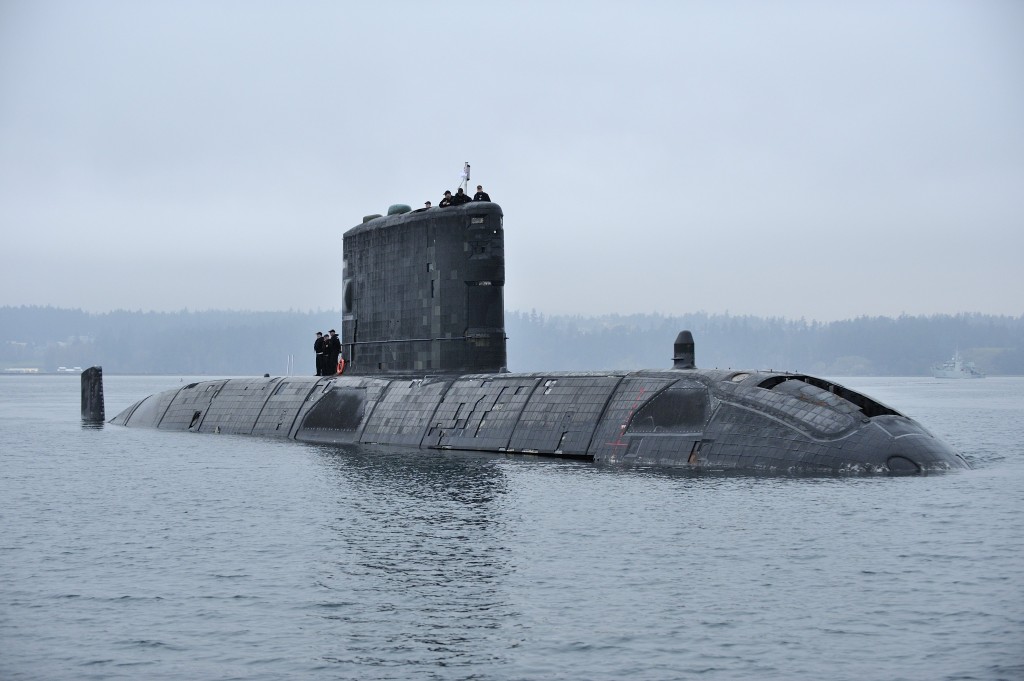
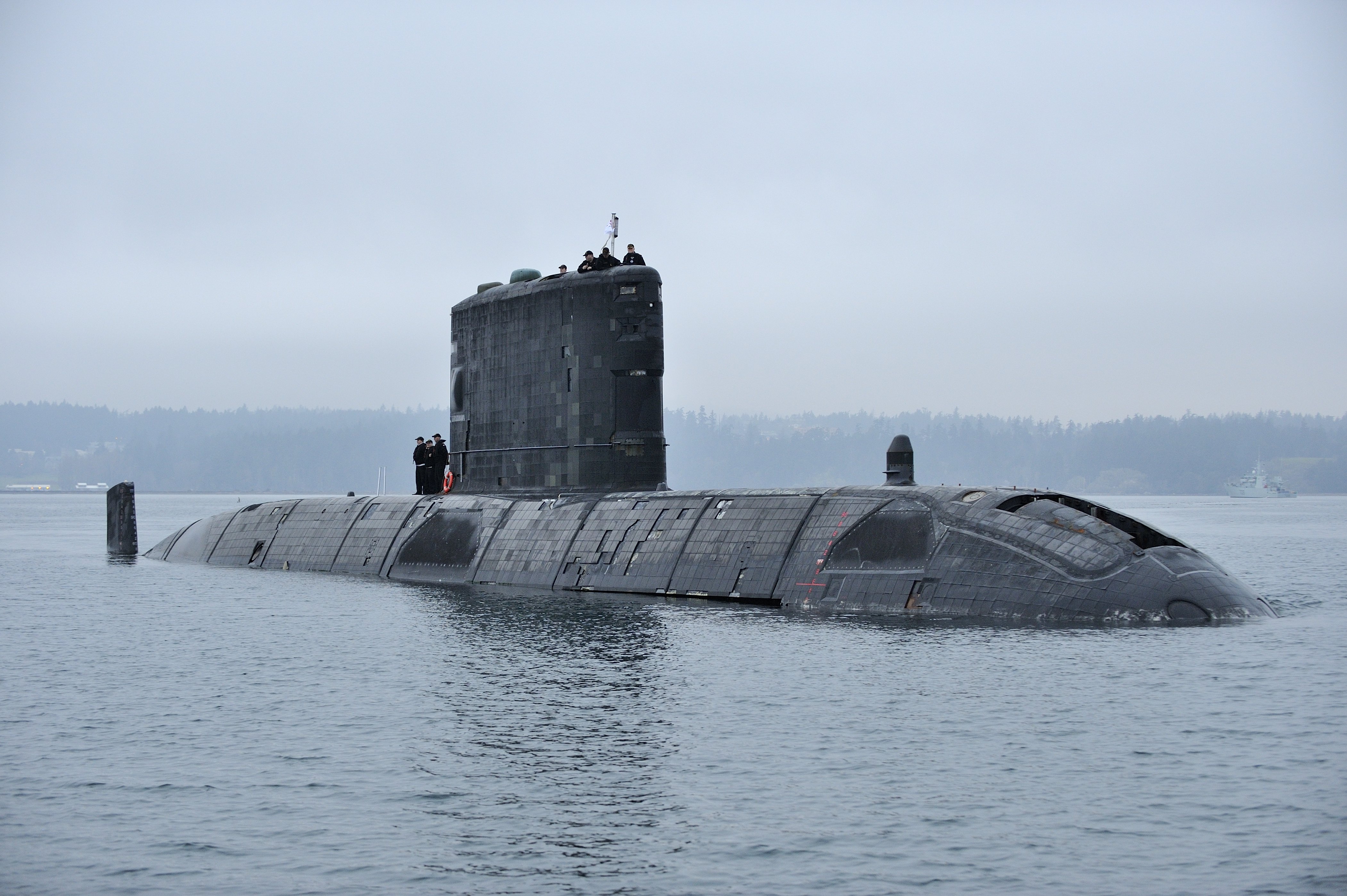
HMCS VICTORIA at Sea
-
8 March 2001 -Serving in RCN submarines opened to women. Under Vice Admiral Greg Maddison, Commander Maritime Command and Chief of the Maritime Staff recommendation, women can serve in the Victoria class submarines. This was not available with the retired Oberon class submarines due to space limitations and privacy concerns.
-
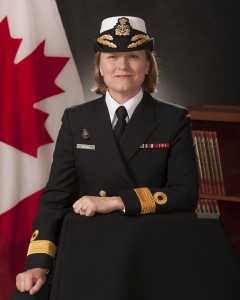
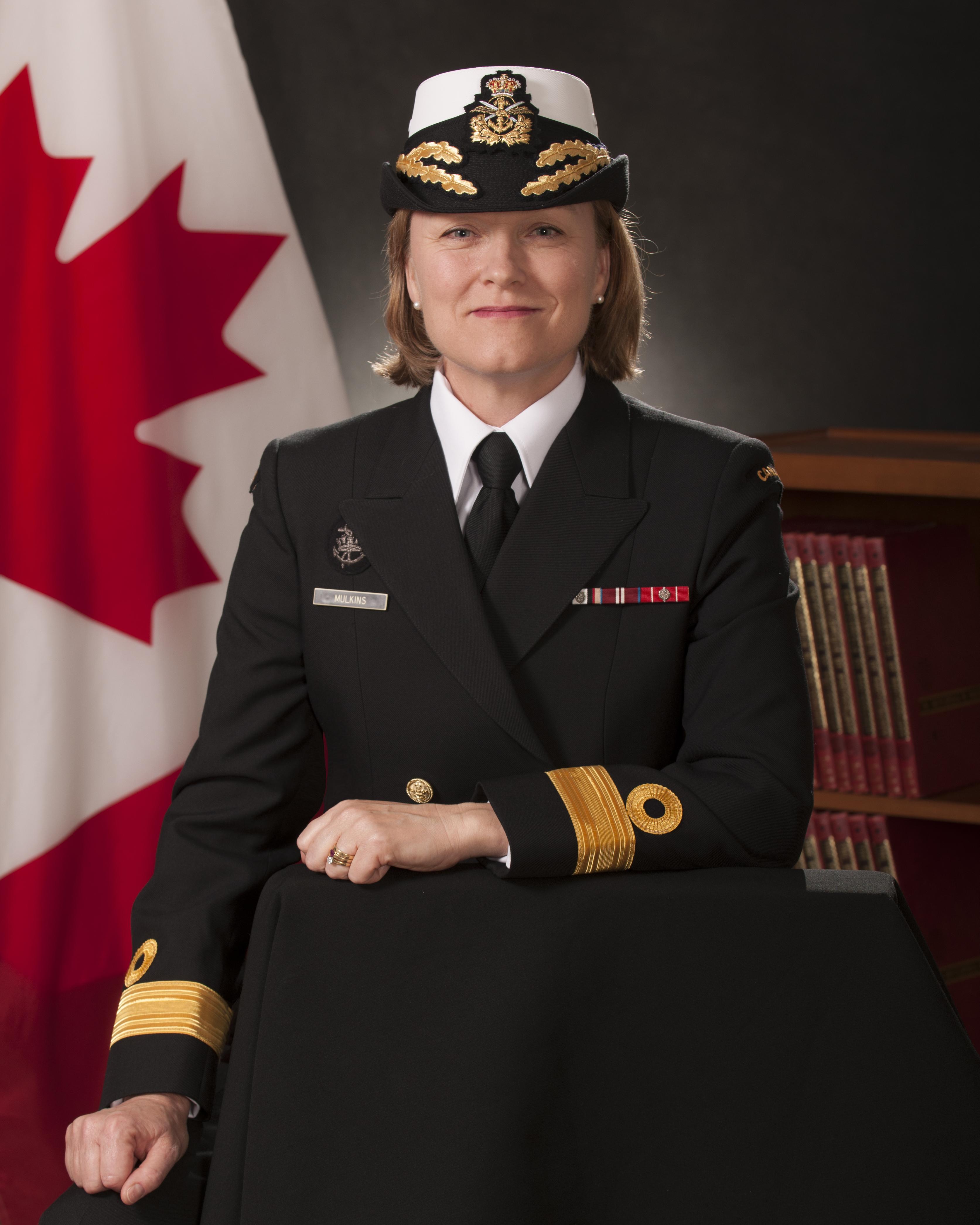
Commodore Marta Mulkins.
11 July 2003 -Lieutenant Commander Marta Mulkins takes command of HMCS KINGSTON, becoming the first woman to serve as a captain of a Canadian minor warship.
-
2003 -Master Seaman Colleen Beattie becomes the first female qualified as a submariner, followed shortly by Master Seaman Carey Ann Stewart.
-
2004 -Chief Petty Officer 1st Class Jan Davis becomes the first female Coxswain of a major warship in HMCS Regina.
-
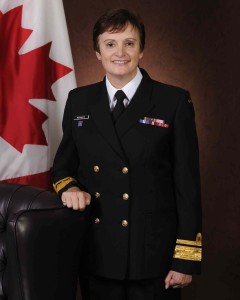
Rear Admiral Jennifer Bennett
2007 -Commodore Jennifer Bennett becomes the first female Commander of the Naval Reserve and the first woman to command a naval formation.

-
2008 -Vice-Admiral Drew Robertson becomes the first Defence Champion for Women.
-
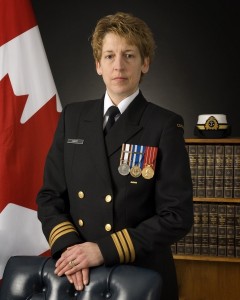
Commander Josee Kurtz
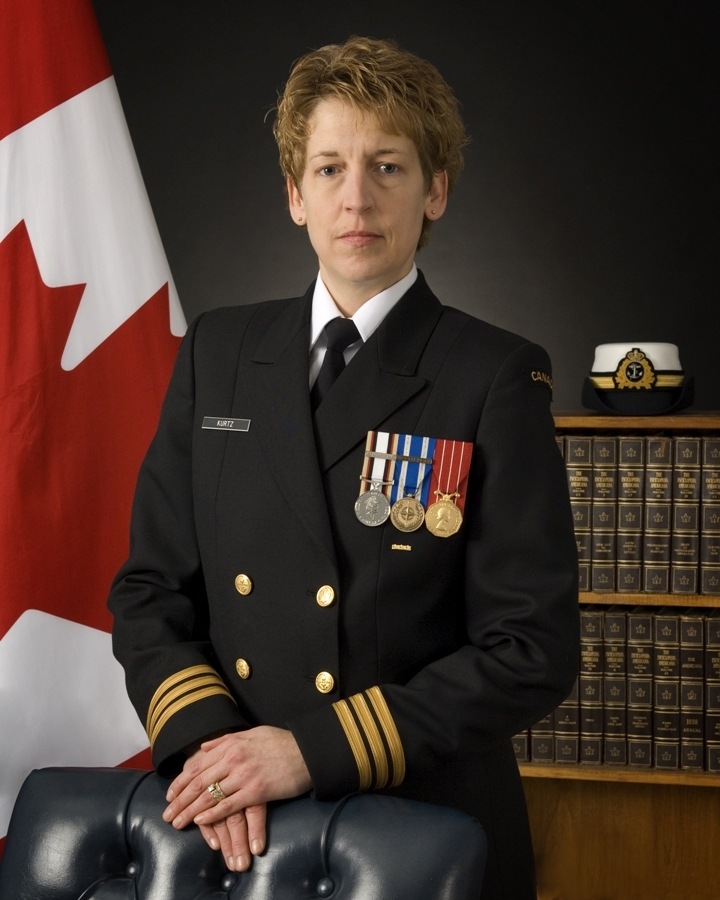
6 April 2009 -Commander Josèe Kurtz becomes the first female commander of a major warship in HMCS Halifax.
-
30 April 2011 -Rear-Admiral Jennifer Bennett becomes the first female promoted to that rank in the RCN and first female Chief Reserves and Cadets, the CAF’s highest Reserve Force position.
-
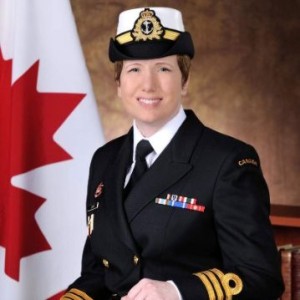
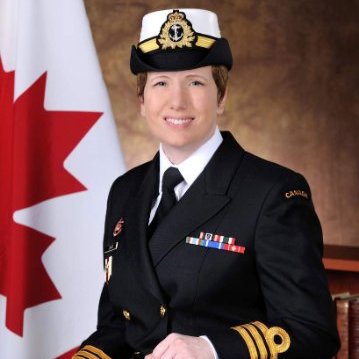
Commander Michalaine Lahaie
-
2012 -Commander Michelaine Lahaie becomes the first female Commanding Officer for the Canadian Forces Leadership and Recruit School.
-
2013 -Rear-Admiral Jennifer Bennett becomes the first female Defence Champion for Women.
-
10 April 2015 -On her 100th birthday, Dr. Margaret Brooke, MBE, Lieutenant Commander (Ret’d) Royal Canadian Navy Nursing Sister received a phone call from Jason Kenny, Minister of National Defence informing her that the second of six Canadian Arctic and Offshore Patrol Vessels will be named in her honour. This is the first time an RCN ship will be named for a women and also the first ship to be named after a living person. Dr. Brooke died on 9 January 2016.

Construction of the Arctic and Offshore Patrol Vessel, future HMCS MARGARET BROOK is progressing well as the middle and stern sections are rolled out of the Irving Shipyard’s assembly building in September 2018. Photo courtesy of Halifax Shipping News.
-
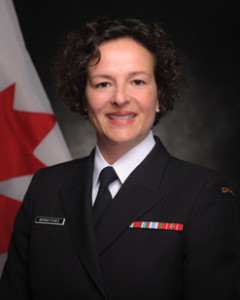
Commodore Genevieve Bernatchez
27 June 2017 -Commodore Geneviève Bernatchez, CD is appointed as the 15th Judge Advocate General of the Canadian Forces and the first woman to hold this position.
-
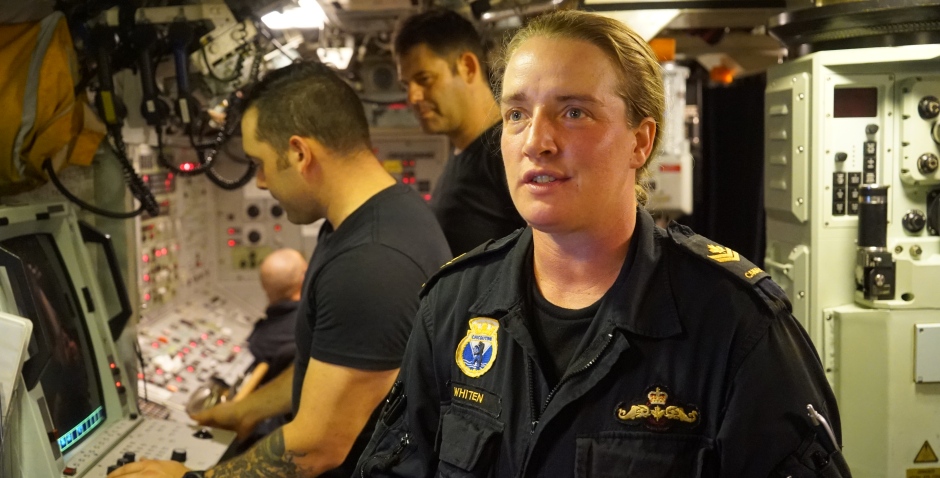
MS Anna Whiten, Weapons tech in HMCS CHICOUTIMI, Victoria class submarine. Courtesy CBC.
-
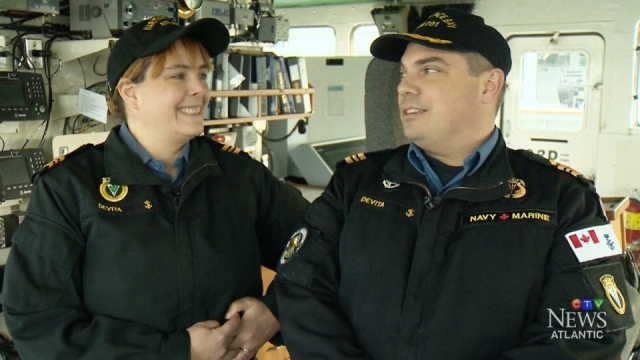
LCDr Victoria Devita and LCdr Chris Devita in HMCS GLACE BAY.
-
4 August 2017 -Lieutenant Commander Victoria Devita and LCdr Chris Devita make RCN history and possibly international maritime history by becoming the first married couple to serve as Commanding Officers of the same Canadian warship. With Chris taking command of HMCS GLACE BAY, while Victoria commanded the Maritime Coastal Defence Vessel from 2013 to 2015.

-
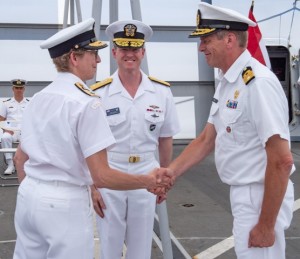
Commander of Standing NATO Maritime Group Two, Commodore Josee Kurtz assumes command from Outgoing Commander Commodore Boudejwijn Boots (right) with Presiding Officer, Rear-Admiral Andrew Lennon, US Navy at the Operational Handover Ceremony onboard His Netherlands Majesty’s Ship EVERTSEN in Souda Bay, Greece during Operation REASSURANCE, June 15, 2019.
Photo: MCpl Manuela Berger, Formation Imaging Services Halifax
RP23-2019-0229-01315 June 2019 –Commodore Josèe Kurtz, RCN assumed command of the Standing NATO Group Two (SNMG2) during a change of command ceremony in Souda Bay on the Greek Island of Crete replacing Commodore Boudewijn Boots of the Royal Netherlands Navy. Commodore Kurtz becomes the first female to lead the multinational, high readiness maritime force and the first woman in the RCN to command at fleet level.
-
8 July 2021 -Commodore Josèe Kurtz, is the first female appointed Commandant and Vice-Chancellor of Royal Military College of Canada (RMC) Kingston.
-
21 November 2022 -Rear Admiral Rebecca Patterson, RCN is appointed as an independent Senator to the Senate of Canada.
-
20 June 2023 -Rear-Admiral Josèe Kurtz becomes the first women appointed Commander of Maritime Forces Atlantic and Joint Task Force Atlantic.

If you are able to contribute to this list, please add your comment below or contact me direct at litwillerroger@gmail.com.
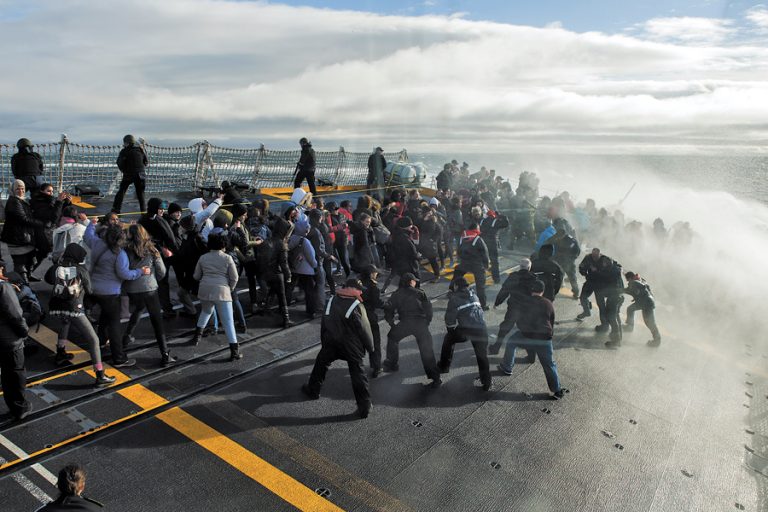
HMCS OTTAWA conducts a Day Sail with 120 women from the Achieve Anything Foundation on 27 Jan 2018.
Today the RCN continues to actively recruit women into the navy, with programs such as the Canadian Leaders at Sea and supporting the Achieve Anything Foundation.
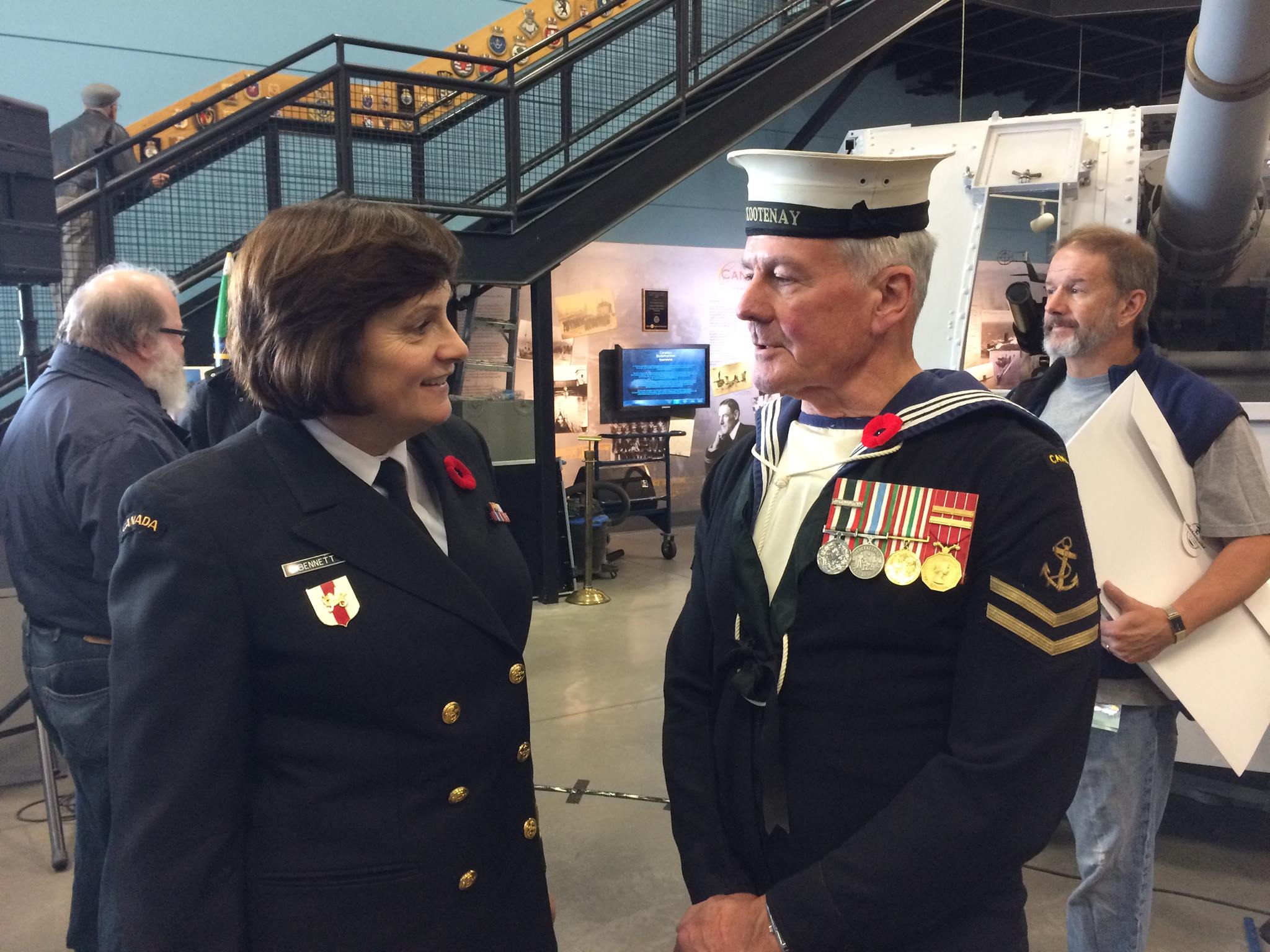
I would like to close this blog with a quote from Rear-Admiral Jennifer Bennett. I was fortunate to meet this incredible woman in Calgary at the Navy Days Celebration at the Naval Museum of Alberta in 2017.
RAdm Jennifer Bennett speaking with Canadian Navy Veteran & HMCS KOOTENAY survivor Lorne Baird. Roger Litwiller Photo
“Women were nurses even in the Northwest Rebellion. Nurses were on the front lines, and they did incredible things. Women rose to the occasion… we stand on the shoulders of those women.”
Jennifer Bennett
A special thank you to Dean Boettger, Assistant RCN Heritage Officer for adding and reviewing the information for this post.
Discover more of the legacy women have contributed to Canada’s Navy. The First Women to Serve in Canada’s Navy
References:
- Historical Milestones of Women in the Canadian Armed Forces, Fact Sheet / March 7, 2017
- Canadian Armed Forces Historical milestones of women, Fact Sheet / March 6, 2014
- Canadian Military Journal, Emilie Anne Plows, Serving Their Country: The Story of the WRENS, 1942-1946
- CFB ESQUIMALT Museum, WRCNS The Wrens.
Published: 24 February 2018
Last Update: 31 July 2022
If you enjoy the content I create and find value in the articles on this website, please feel free to click on the coffee icon on the bottom right of the webpage and “Buy me a Coffee!” Your contribution will ensure that I can continue to provide the stories of these incredible Canadians and the Canadian Navy. Thank you for your support. Cheers, Roger
