
That’s me, in 1983 as a rookie Ambulance Attendant at Rushnell’s Ambulance Service in Trenton, Ontario.
Recently I was asked this question by a young lady serving me a coffee while I was on my way to work. Later in the shift the wife of a patient asked, how long I had been a Paramedic? She was surprised when I answered 36 years, and then stated, “You certainly have seen a lot!”
Both these questions got me thinking about my career, what I have done, what I have accomplished and of course what I have seen.
I must admit, I too am surprised when I realize that I am still working on the road as a frontline Paramedic. All my coworkers who started before me are gone. Many in the first few years that I worked, at that time the career life expectancy for a Paramedic was very short. We did not have a Retirement Plan, because Paramedics were injured long before retirement age. In fact, my college professor informed us on the first day that we can expect to be injured within ten years.
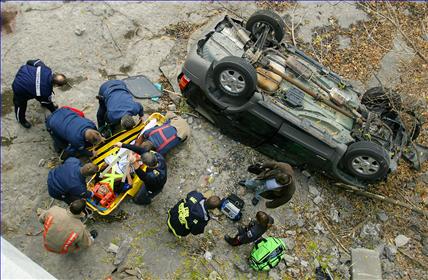
So you can understand why I am surprised to be looking back on a 36 year career. Many things had to change to allow my profession to work a full career. But one thing has stayed the same. The calls we respond to. They range from minor, trivial complaints to deadly situations, some with terrible outcomes.
These two questions caused me to consider, just how many calls I have responded to. I knew, using simple math I could work it out. Each shift is unique, some are busy, others are quiet, so an average is needed. When I started, we still had shifts that we didn’t respond to a single call. Today we are routinely responding to 10 or more calls in twelve hours.
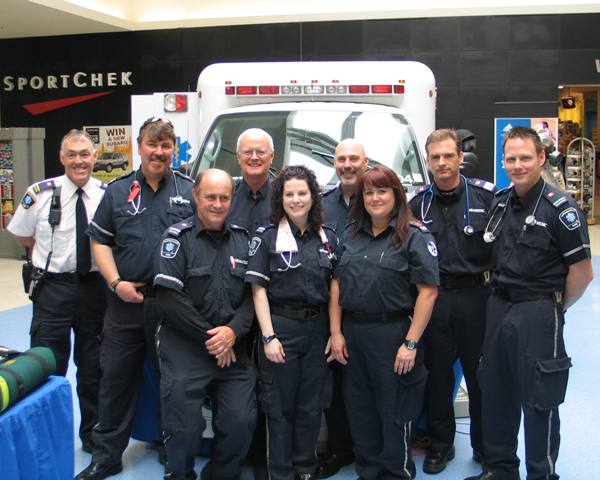
Paramedics draw strength and support from each other.
I decided on an average of four calls per shift, working 180 shifts in a year, which is 720 calls per year. Multiplied by 36 years, I have responded to almost 26,000 calls.
This led me back to the first question, not all of these calls have been emergency’s, many have been our “run of the mill” type calls. Patient transfers make up approximately 30% of our call volume and the remainder are more serious medical and trauma responses, most with positive outcomes and quickly filed away to memory.
But what about those calls that cannot just be forgotten. If only 1% of the calls I respond to have the potential to be a catastrophic event, then I have been exposed to 260 Critical Incident Stress type calls.
The latest research is now recognizing that PTSD is not caused by a single event, but an accumulation of critical events. Over the career of a Paramedic the number of critical events can be overwhelming.
There are many calls that I cannot simply forget, those calls, the events and the people involved become a part of you. “Flashbacks” can be triggered at any time. Driving by a scene, a house, an intersection, sights, sounds and smells can also be a trigger. Instantly you recall everything about that call, the faces of the people, the sound of a mother’s scream, the tragedy that brought you there and the tragic outcome for the people and families involved.
Fortunately, Para-medicine is improving in how we accept and treat PTSD.
The first time I took a stress leave it was for family reasons, because there were no provisions for work related stress. My supervisor at the time informed me that, “You have to make a decision!” When I asked further, he said, “If you want to work or family.” Needless to say, I was triggered by this. Repressing my anger, I replied “I know you can’t ask me that and you will not like my answer” and left the room.
Today PTSD is better recognized and does not carry the stigma that it once did. But we still have a long way to go. Many Fire Departments are now booking off their firefighters after a critical call for several hours giving them the time to decompress. Unfortunately for Paramedics after a critical call, we are given another call to respond too.
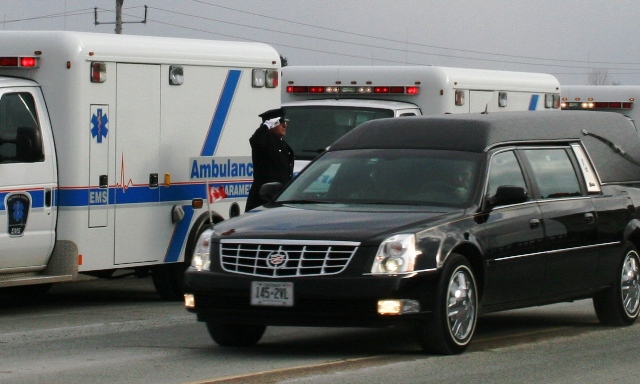
Untreated, PTSD can have a deadly outcome!
I should note, not all flashbacks are the bad calls. The tragic calls that had positive outcomes are triggered too. Successful resuscitation that resulted in a person going home to their family, rescues, positive medical interventions, these are the calls I choose to remember.
Delivering a new born child, is one of those joyous calls that we respond to. I remember every detail of the first baby I delivered. The address, the weather conditions driving to the house, the time of day, the surprise I felt when the father rushed out of the house yelling, “She’s having the baby!” The call was given as an unknown and that was our first indication of why we were called. The condition of the home, where the mother was we when entered, her expression as we started to get ready to deliver, every word that was spoken. The smallness of this tiny infant as I delivered him. The incredible softness of his warm pink skin as he came into my waiting hands. The sound of his first cry with his arms and hands trembling. Wrapping the little one in a blanket. Tending to mom after the delivery, the trip into the hospital and the ER staff waiting with a heated incubator, smiles all round. Then I realized just how soiled my uniform was from the delivery, not a problem, we had just delivered a new, precious child into this world. To this day, every sight, sound, smell, touch stays with me and I smile whenever I drive by that house.
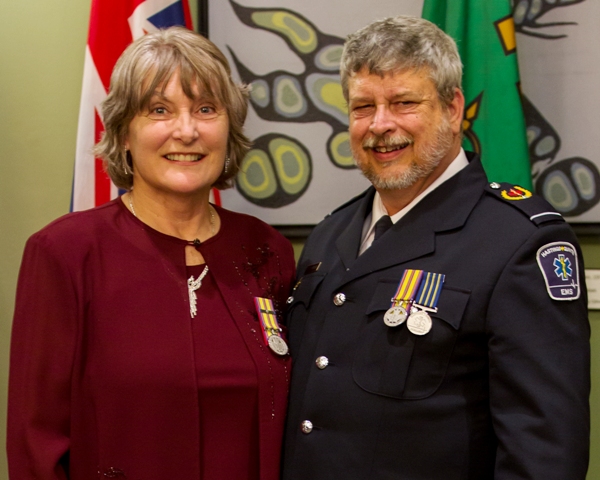
My greatest support and strength comes from my wife, best friend and partner. Rhonda is also a 31 year veteran of EMS, now retired and we were partners for over 15 years.
This was a joyous call. Now think of the flashbacks of those calls that ended in tragedy.
The young lady that asked me that question was simply curious, as many others that have asked a Paramedic, “What is the worst thing you have seen?”
I responded, “I have seen a lot, I have done a lot and some questions I choose not to answer.”
Related Post: “Suck It Up Buttercup!” No Longer an Option for First Responders Facing Critical Incident Stress and PTSD.
