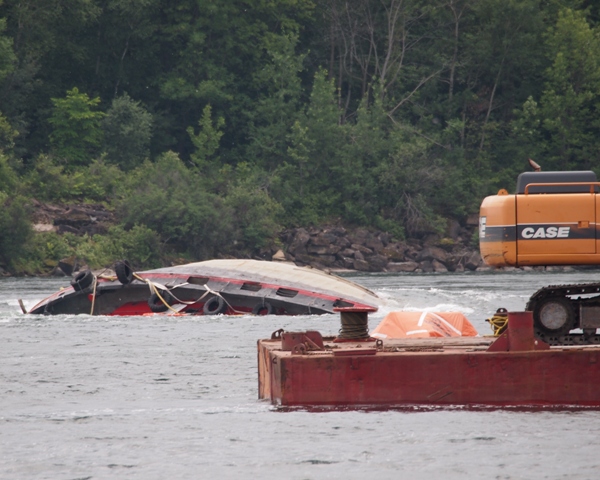
Lac Manitoba lying on her port side in the St Lawrence River. The raft used by her crew to escape can be seen behind the barge.
Yesterday there was a tragedy on the St. Lawrence River at Cornwall, Ontario. While towing a large barge to the north span of the international bridge a tug boat and a landing craft capsized and sank in the river.
Fortunately there was no loss of life and only the skipper of the landing craft received a sprained ankle. The tug boat was lost first when she capsized in the strong current of the river. The landing craft, LCM 131 of West Front Construction, capsized while attempting to secure the drifting barge when she broached under the bow of the barge.
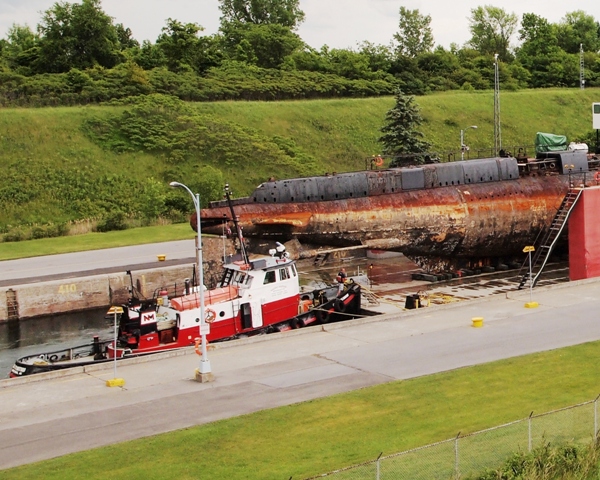
Lac Manitoba in 2012 assisting HMCSubmaine OJIBWA through the Iroquois Lock on the St. Lawrence Seaway.
What makes this event so significant is the loss of the tugboat. Owned by McKeil Marine of Hamilton, Ontario, her name for many years has been Lac Manitoba. But that was not the name she was born with.
Her story begins with her first name CT-75, in 1944 in Trenton, Ontario. She was one ship in a contract to build 156 tugboats for the Allied War Effort, given to the Central Bridge Company. The class of tugboats were called TANAC’s. The name is an acronym for CANAda Tugboats. She was destined to fight the Second World War in service to the commonwealth in many foreign ports performing harbour and towing duties.
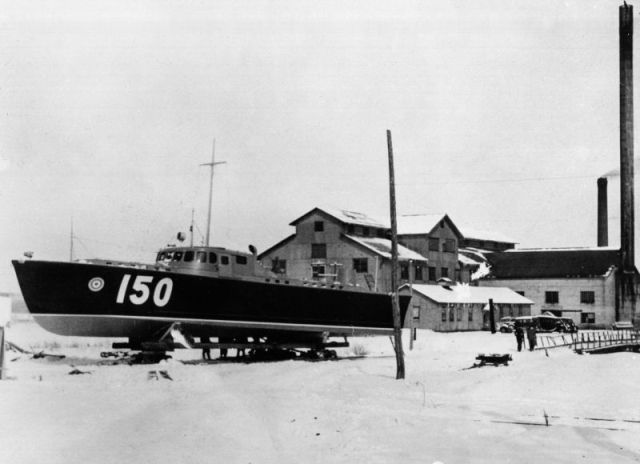
First of six 70 foot Hospital Rescue Launches built for the RAF at Trenton, Ontario, by Aero-Marine Craft Ltd in 1940.
If you go to Trenton you will not find any evidence of this massive ship building contract. In fact over 170 ships of several types were built in Trenton during the war. Including Hospital rescue launches for the RAF, bristling with machine guns waiting to rescue downed aircrew from the English Channel, to ammunition lighters, fire-boats and tugboats.
Central Bridge was exactly what the company name implies, a bridge builder. So desperate was the need for ships that any industry capable of joining two pieces of steel was employed in shipbuilding. The biggest problem faced by Central Bridge was their primary facilities were located two miles inshore. This was solved in a unique way, as you will see later in this blog.
Stern section ready to be moved to the hull.
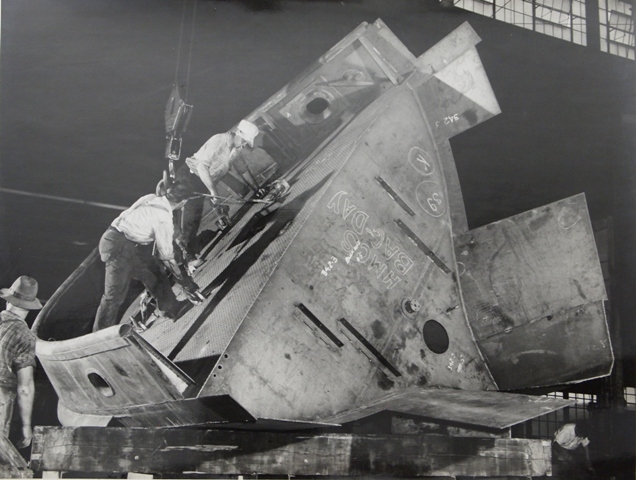
Pre-fabricated stern section ready to be moved and fitted to the hull of a TANAC tugboat at the Central Bridge Company, Trenton, Ontario.
The employee’s looked at traditional shipbuilding practices and decided it was impractical to build a ship from the keel up. Welding of the keel and hull would have to be performed at ground level with most of the work on their backs. When they built a bridge, they constructed it in sections, turning the section for the most practical position to work. When all the sections were complete, the bridge was assembled.
Central Bridge started construction of the tugboats in exactly the same way. First building the hull inside the plant, in several sections, turning each section to make the work easier. Then all sections of the hull were joined and the hull plates attached.
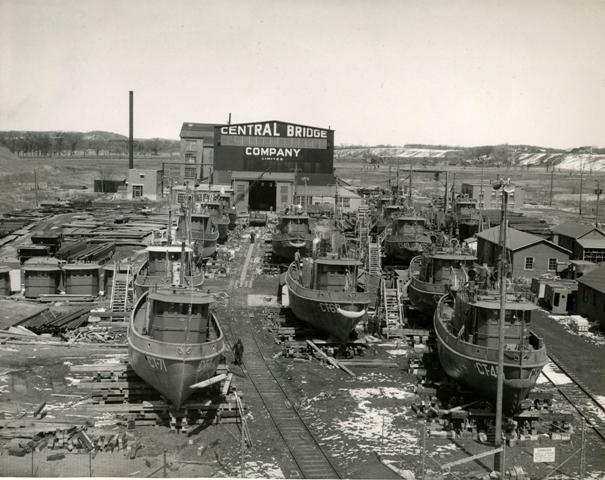
Over fourteen tugboats are seen in this photo in various stages of construction at the Central Bridge in Trenton.
The hulls were moved out of the assembly building to a platform where the 270 hp Fairbanks-Morse Diesel engines were lowered onto the mountings. The hulls were then moved to an outside assembly area for completion. Again, using their bridge building practices the remaining sections of the tugboat had already been pre-built. In turn the crew cabin, wheelhouse, engine room skylight, winches, towing gear and other fitting were lowered and attached to the hull.
So efficient was this prefabrication assembly line, the 250 employees were able to complete a tugboat every four days!
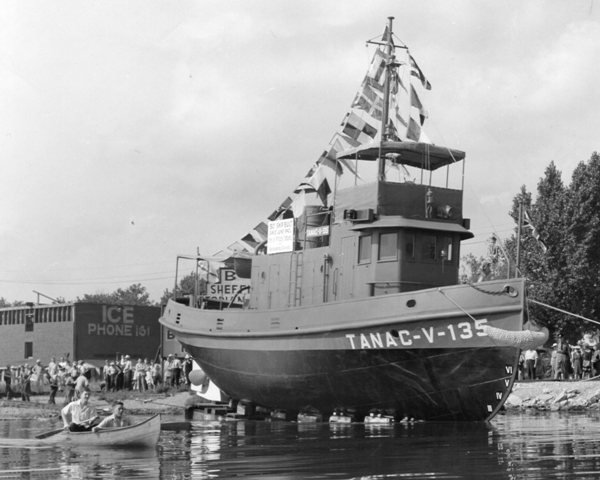
The 50th TANAC tugboat launched by rail car into the Trent River.
This is how CT-75, Lac Manitoba was born. But she still had to get to the Trent River two miles away. Central Bridge accomplished this by building two specially designed rail flat cars. The tugs were moved along the existing CPR tracks to the river. The early tugboats were launched traditionally, dropping sideways into the river.
Later with the efficiency of construction, a faster method was needed. A rail line was built on the winter ice of the river and allowed to sink to the bottom in the spring. The tug on the rail car would travel down the grade into the river and the tug would simply “float off” the rail car. Not nearly as spectacular as the traditional launching, but they were able to launch as many as three tugs per day.
Once a small fleet of tugs were ready, they were sailed to Oswego and down the canal system to New York City where they were loaded onto merchants ships and transported throughout the commonwealth to start their duties.
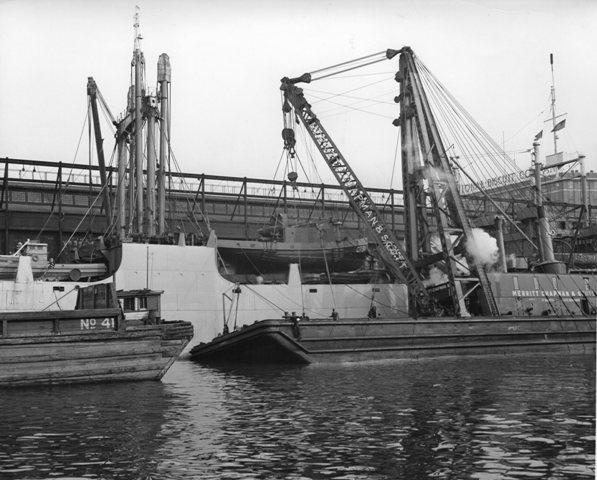
Each Tugboat was lifted onto the deck of a merchant ship for transport to ports throughout the Commonwealth.
This record of wartime shipbuilding is very significant in our history. The contract to build these ships was the third largest shipbuilding contract awarded during WWII in Ontario. Beating out several well established shipbuilders in Ontario, including Collingwood and Kingston Shipyards.
Secondly, the unique construction and prefabrication used in the building of these tugboats has become adopted around the world and refined to build today’s supertankers, mega-cruise ships and warships.
Also of importance to these tugboats, renown shipbuilder Herb Ditchburn, famous for the Muskoka boats, moved to Trenton to provide his expertise to Central Bridge and was instrumental in many of the successful innovations used in the construction and launching of the TANAC tugboats. An argument can be made that CT-75 and her sisters are “Ditchburn Boats!”
Speaking to a representative of the ship’s owners, they hope to re-float and repair Lac Manitoba and return her to service.
If she is not,then this tugboat will be destined for the breakers yard and will disappear. A true tragedy, Afloat and in-service Lac Manitoba is a living testament to the time that created her and the ingenuity of her construction. Without Lac Manitoba, then this story will pass from living memory into history.
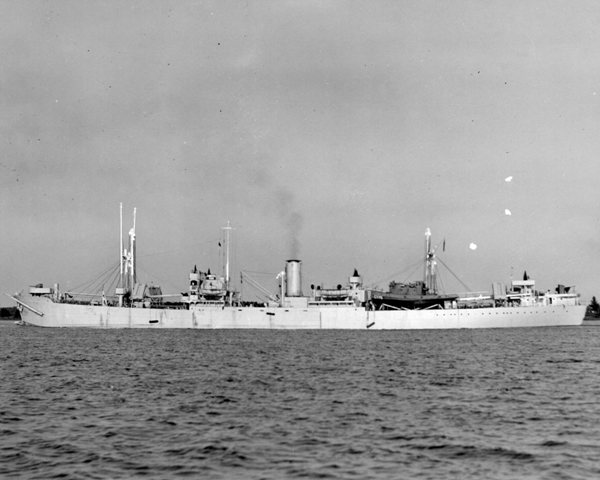
In the original photo, the pennant numbers on this tugboat clearly show CT-75, loaded and on her way overseas. After WWII she will find her way back to the Great Lakes and McKeil Marine as Lac Manitoba. Where she will continue to work as a tug boat for over seventy years!
Note: The shipbuilding program in Trenton is the subject of my next book, If anyone has knowledge of any other TANAC tugboats, please contact me at litwillerroger@gmail.com.
Photo Credits:
All Black and White photos are courtesy of the Trent Port Historical Society in Trenton. The colour photos were taken by myself.
If you enjoy the content I create and find value in the articles on this website, please feel free to click on the coffee icon on the bottom right of the webpage and “Buy me a Coffee!” Your contribution will ensure that I can continue to provide the stories of these incredible Canadians and the Canadian Navy. Thank you for your support. Cheers, Roger
