• Writing
    • Writing History -Get it right or else!
    • Just Tell The Story -The Best Advice I Ever Received
    • How I became an “Accidental Archivist!”
    • Finding the Perfect Place to Write
    • White Ensign Flying -My Inspiration
  • Maritime Affairs
    • Women in the RCN -An Incredible Legacy
    • HMCS IROQUOIS Exploits After VE Day
    • Unveiling MV Asterix, Resolve Class AOR
    • MV Asterix -Why Not HMCS ASTERIX?
    • MV ASTERIX -Exterior Tour of RCN’s Interim AOR
    • Throwing Away Canadian History, ex-HMCS ATHABASKAN to go to Breakers!
    • Ships For Victory -Can Canada Build Ships Today
    • The Canadian Maple Leaf -A RCN Tradition Honouring Our Sailors Past
    • RCN Could Chase Subs Underwater!
    • 10 Foot Model of RCN WWII Corvette TRENTONIAN
    • “Crest is for Teeth, Ship’s Have Badges” and Other Poor Naval Grammar
    • My Experience with a Rogue Wave on the High Seas
  • Paramedics
    • When Did I Become An “OLD FART!”
    • “Suck It Up Buttercup!” No Longer an Option for First Responders Facing Critical Incident Stress and PTSD.
    • Dedication Ceremony for Afghanistan Memorial in Trenton
  • Railroading
  • Roger’s Rambles

Roger Litwiller

Author and Naval Historian

  • Home
  • The Books
    • White Ensign Flying -The Story Of HMCS TRENTONIAN
      • Bonus Material
      • Published Reviews
      • Readers Comments
    • Warships of the Bay of Quinte
      • Published Reviews
      • Reader Comments
    • Canadian Emergency News
    • Esprit-de-Corps Magazine
  • The Author
    • Profile
      • Biography
    • Photo Art
    • Paramedics
    • Railroading
  • Research
    • Canada and the Battle Of Atlantic
      • Canada and the Battle Of Atlantic
      • Royal Canadian Navy -Victory’s/Losses Battle of Atlantic in World War II
      • Royal Canadian Air Force Submarine Attacks Battle Of Atlantic during WWII
      • Canadian & Newfoundland Merchant Navy Losses “Battle Of Atlantic in WWII
    • Royal Canadian Navy Pennant Numbers World War II
    • RCN Photos
    • Links
  • RCN Photo of the Day
  • Events
  • Contact
You are here: Home / Railroading / Storm Drains That Can Be Placed Anywhere -A DIY Project

Storm Drains That Can Be Placed Anywhere -A DIY Project

July 13, 2014 by Roger Litwiller

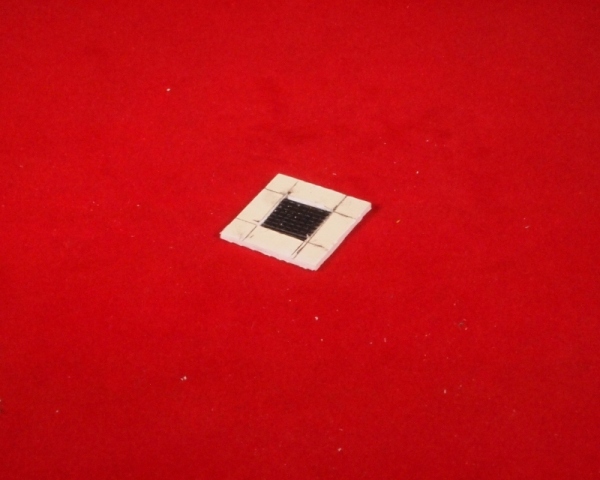
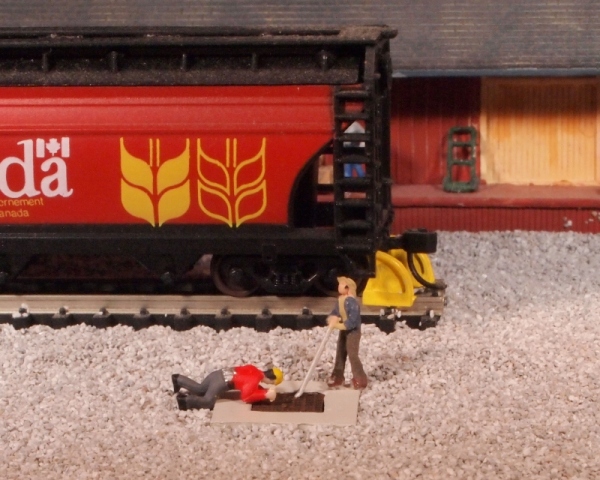
Storm Drains“I think I can see my keys.” Adding a storm drain can create a scenario of it’s own.

Storm drains and heavy rain runoff is something that we don’t need to worry about on our layouts. The real world is not so fortunate. So having drainage modeled into our layouts is something we need to consider.

I created a quick and simple method of modeling storm drains on my layout, The Trenton Subdivision in N Scale, using some old scraps.

Important Note -All my measurements are in millimetres (mm). I find this is more accurate than trying to measure 37/64 of an inch. Also being Canadian we us metric. On that note, that is the Canadian spelling for millmetres

Storm Drain

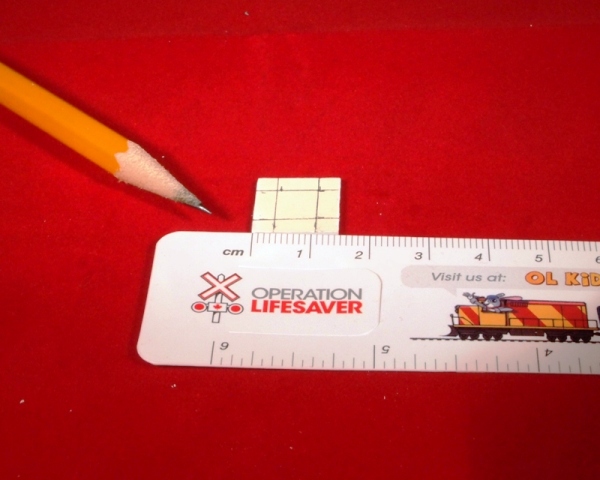
Step 1: I had a left over section of catwalk from the Heljan Sanding Tower kit. The width of the catwalk is 7 mm, I want 4 mm ( 2 scale feet) of concrete on all sides of my storm grate. From a 1 mm thick sheet of styrene cut a square 15 mm by 15 mm.

Storm Drains

Step 2: Cut a 7mm x 7mm square from the catwalk. Paint this piece black, make sure you do not fill the grating in the catwalk. Once the black paint is completely dry, dry brush rust colored paint over the grating to bring out the texture of the grate.
Storm Drains

Step 3: Measure a 7mm x 7mm square on the styrene. The size of the styrene can be changed to match the size of grating available. Large storm drains will have a wide concrete border around the grate.

Storm Drain

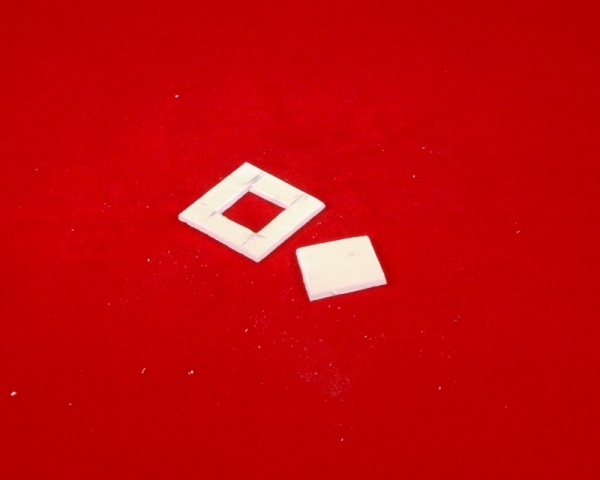
Step 4: Carefully cut the centre of the square from the sheet of styrene. Any nicks or slips with the knife will show as a line in the concrete when finished.  File the edges smooth.

Storm Drain

Step 5: Check for correct size. Insert the grate into the hole, it should fit very snug.
Storm Drain

Step 6: Cut a second square, slightly larger than the hole in the base square. Exact size in not important as long as it can not be seen on the finished edge of the base square.

Storm Drain

Step 7: Glue the smaller square to the bottom of the base square to form a pocket for the grate to rest in. Then glue the grate into the hole.

Storm Drain

Paint the entire base with a concrete paint and you are ready to place this storm drain anywhere on your layout.

Storm Drain

This is a picture of how I took the scenery photo at the beginning of this blog.  I call this “Insta Scene.” I placed a short section of track on foam roadbed in a shallow plastic tray. I filled the area of the photo with ballast and placed a building in the background. The storm drain is nested into the ballast and the two figures are placed with temporary glue, to keep them standing.  This is a portable photo studio with white box and two portable halogen lamps. The camera sits on the tripod in the foreground.


Filed Under: Railroading Tagged With: Model Building, Model Railroading, N Scale, Roger Litwiller, Trains

About Roger Litwiller

Author, historian and lecturer of Canada's proud Naval heritage. Published books -White Ensign Flying, Warships of the Bay of Quinte. Retired Paramedic with 37 years service.

I am a storyteller, who can save your life!

Meet the Author

Author, historian and lecturer of Canada's proud Naval heritage. Published books -White Ensign Flying, Warships of the Bay of Quinte. Retired Paramedic with 37 years service.

I am a storyteller, who can save your life! Read More…

Follow for Daily RCN History posts!

  • 
  • 
  • 
  • 
  • 
  • 

Support the Research!

Thank you for your interest in discovering the legacy of Canada's Sailors by visiting my website. If you found value from the articles on this website, please support my ongoing research by clicking on the "Buy me a Coffee" icon on the bottom right corner. Your contribution will assist my continued work. Thank you!

Archives

© 2024 Roger Litwiller. All rights reserved. · Website by BUILD MARKETING